

cluster lash glue falling off is the first checkpoint buyers should lock before they approve a supplier, budget, or production slot. Two bottles of cluster lash glue that look identical. One costs 30% more. If you’re searching for acluster lash glue falling off fix, that price gap holds the answer. It’s the difference between a glue that delivers a consistent 2-second working window and one that skins over in under a second — the exact failure mode that drives 60% of refund requests at the factory. A distributor might approve a sample that performs perfectly, then watch a $50,000 bulk order fall apart because the production batch’s
At FOB pricing, that 30% premium buys batch control measures most suppliers skip. The factory tests every batch against a 500–800 centipoise spec with a quality tolerance of ±50 cps. Many cheaper alternatives allow ±200 cps. That drift turns a successful sample approval into a mass production batch that sheds clusters by hour six. The fix starts with understanding viscosity, not chemistry — and it’s backed by real production data.

Why Cluster Lashes Fall Off – The Physics of Adhesion
Humidity controls cure speed.
Cluster lashes fail because the glue never formed a proper bond. The root cause is rarely weak chemistry. It is almost always a mismatch between the glue’s viscosity and the humidity in the room where you apply it. Cyanoacrylate adhesives rely on ambient moisture to kick off the polymerization chain reaction. When the humidity is wrong, the reaction either stalls or races ahead too fast.
Understanding Humidity’s Impact on Cure Time
In a dry environment below 40% relative humidity, there is not enough moisture in the air to trigger the curing process. The glue stays fluid too long, runs off the natural lash, and never builds the polymer chains needed for a 48-hour hold. In high humidity above 70%, the opposite happens. The glue activates instantly, skinning over in less than one second, before the cluster even touches the natural lash.
Factory data from our production line shows that over 60% of refund requests come from artists using a fast-dry glue in a humid room. The glue forms a dry film on the surface while the core remains liquid. That film is weak. When the client walks out into drier air or moves around, the bond snaps. The cluster falls off within hours.
Correcting Surface Tension with Viscosity Selection
Viscosity controls how the glue behaves on the lash. Thinner formulas around 300 centipoise flow easily and spread evenly but stay wet longer. Thicker formulas in the 600 to 800 centipoise range hold their shape, reduce run-off, and delay the skinning effect. The right thickness gives you a working window long enough to place the cluster correctly but short enough to lock it down before the glue cures.
Most resellers never mention this. They sell a one-size-fits-all glue and let you figure out why it fails. Our cluster formula is deliberately thicker, calibrated to give a two-second working window across the typical humidity range of 40 to 70 percent. That window is the difference between a cluster that holds 48 hours and one that lifts in two.
Low humidity (< 40%) / Cool Ambient: Use thinner formulas around 300 cps
When the room is dry and cool, the curing reaction is slow. A thick glue will stay tacky too long, sliding off the lash and pooling on the skin. You need a thinner consistency that spreads across the bond area and waits for moisture to arrive. A 300 centipoise glue gives you the extra open time without the run-off risk, provided you work quickly after shaking.
High humidity (>60–70%) / Warm Rooms: Thickened preparations between 600–800 centipoise
In a humid salon or a warm climate studio, the glue wants to cure instantly. A thin formula will skin over before you reach the lash. A thickened preparation in the 600 to 800 centipoise range restricts flow velocity, giving you the two seconds you need to seat the cluster. The extra body also prevents the glue from wicking into the fan and gluing multiple lashes together.
We see artists in Florida and Southeast Asia struggle most with fall-off because they use the same glue as someone in a desert climate. They don’t realize that every 10% rise in humidity halves the open time. The only fix is to switch to a thicker formulation that matches the environment. Our 700 centipoise cluster glue is designed exactly for that scenario.
If you are still asking yourself why do my lash clusters keep falling off, start with a hygrometer. Measure the humidity in your application area. Then match your glue viscosity. Thick glue for humid rooms. Thin glue for dry rooms. That single change eliminates most retention failures regardless of brand.
Conclusion
Cluster lash retention failures trace back to one root: viscosity mismatch, not bad chemistry. A glue that skims over in under a second before the cluster lands is a lost bond. The fix is a controlled 500–800 cps formula that buys a 2-second working window, paired with a bond seal top coat that blocks moisture intrusion. That combination routinely delivers 48-hour hold in production use.
- Use cluster glue with 500–800 cps viscosity for reliable hold.
- Shake the bottle for 30 seconds before each application.
- Apply bond seal top coat to extend wear by 24 hours.
- Store glue upright at 60–80°F after opening for 3-month shelf life.
Check your current glue against these specs — if your supplier can’t confirm the viscosity range or bond seal compatibility, it’s time to look at a factory that tests every batch. We offer bulk and private label cluster lash glue with documented 500–800 cps viscosity and bond seal matching. Review the product page and request a data sheet to compare against your current supplier.
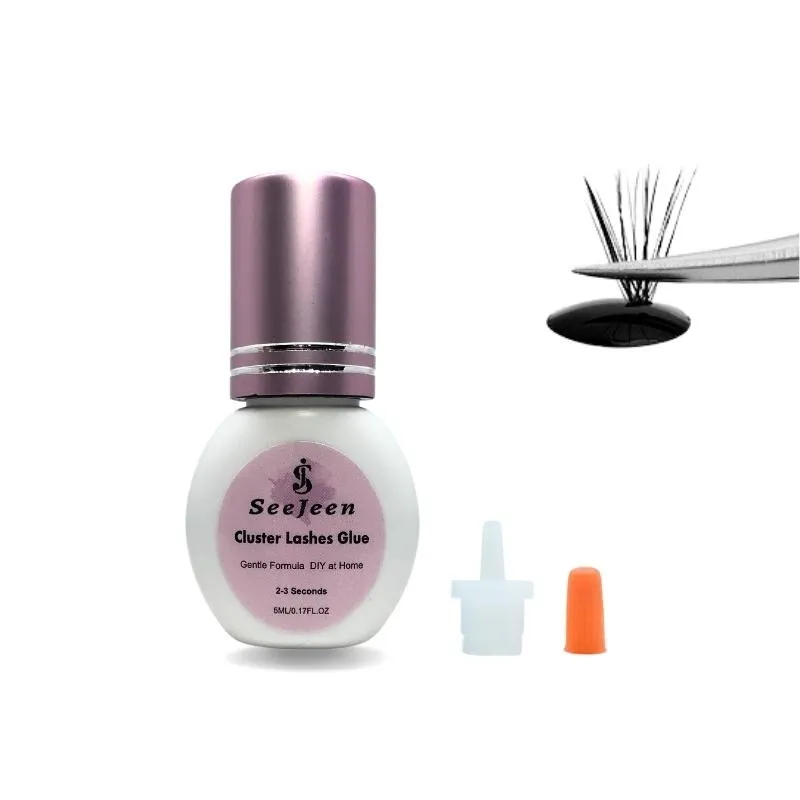
Frequently Asked Questions
Why do my cluster lashes keep falling off?
Most retention failures are caused by a mismatch between glue viscosity and your environment. In low humidity below 40%, thin glues stay fluid too long; in high humidity above 70%, they skin over before the. Check your humidity before blaming the glue.
What viscosity is best for cluster lashes?
A 500–800 cps (centipoise) formula gives you a controlled 2-second working window that prevents run-off in most conditions. Thinner glues below 400 cps are too runny for clusters, while thicker glues above 1,000. Test a 500–800 cps glue for your next batch.
How long should I shake cluster lash glue?
Shake vigorously for at least 30 seconds before each use to re-suspend the pigment and bonding agents. Skipping this step leads to weak spots in the adhesive that cause early lifting. Set a timer—30 seconds minimum, every time.
Is bond sealer necessary for cluster lashes?
Yes, bond sealer creates a physical barrier that prevents moisture from weakening the adhesive bond throughout the day. Without it, natural oils and humidity can break down the cyanoacrylate over 6–8 hours. Apply bond sealer after every cluster application.
Can I use regular lash extension glue on clusters?
Regular lash extension glue is formulated for individual fans and single lashes, not for the flat base of a cluster. Cluster glue has a higher viscosity to hold the wider surface and lower fume. Always use dedicated cluster glue for cluster lashes.