

A factory that emails you an MSDS the same day you ask has answered one question and avoided several. The sheet is a screening document, not a guarantee: it tells you what the manufacturer chose to disclose about hazards, not whether the formula is safe for eye-area use, not whether it is even the formula you are buying, and not whether the supplier is accountable in your market. Before your deposit leaves, work through five specific checks on that PDF: does it name the exact product, does its Section 1 put down a party your customers can actually reach, does Section 3 list CAS numbers instead of a “proprietary blend,” is it current, and does it match what your bottles will claim. Each of those questions catches a real failure mode, and this guide walks through them in order.
What an MSDS/SDS Is and Is Not
First, the vocabulary. The older term is MSDS (Material Safety Data Sheet); the standardized modern format is the SDS (Safety Data Sheet), organized into 16 sections under hazard communication rules in most markets. When a supplier sends you “the MSDS,” check whether it is actually a 16-section SDS or an older-format sheet; both can be useful, but the format tells you which rulebook the document was written against.
Second, its limits. A Safety Data Sheet communicates workplace chemical hazards to people handling the product: flammability, skin and eye irritation, what to do in a spill, what’s in it. It is not a certificate of cosmetic safety, not approval to sell, and not a quality test. A factory that hands over an SDS and nothing else has given you one input of a much larger diligence package.
That distinction matters more in this category than in most, because eyelash-extension adhesive is a cosmetic for the buyer’s use and a workplace chemical for the salon at the same time. The FDA’s eye-area cosmetic safety guidance frames the first half; the sheet you are reading frames the second. You need both halves to line up.
Check 1: Does It Match the Exact Product You Are Buying?
The single most common failure is a mismatch between paper and bottle. Suppliers keep one generic SDS on file per product family, and what they send you describes the family, not your SKU.
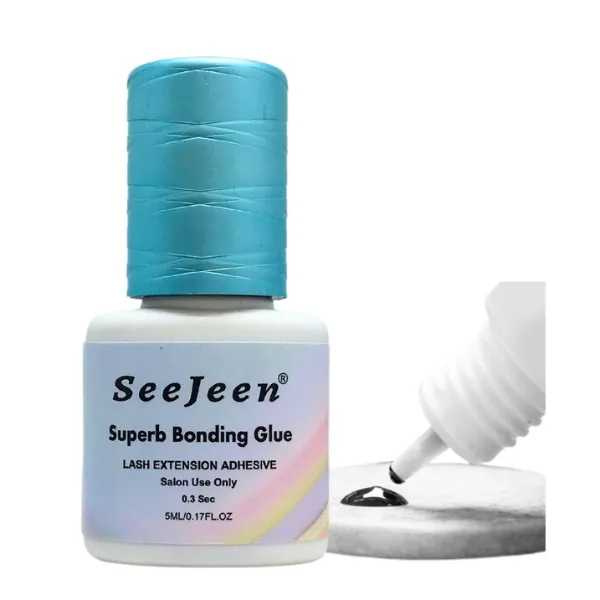
Verify the product identity line against your quote: product name, formula tier (the speed grade on your order), color (clear, black, and tinted UV formulas are different products), and any SKU or code. A fast professional formula and a sensitive-eye formula can share a brand page while differing in composition. If the sheet’s identity does not match what you ordered, you are holding documentation for someone else’s glue, which is worse than holding nothing when a distributor asks.
Check 2: Who in Section 1?
Section 1 of a compliant SDS names the manufacturer, importer, or other responsible party, with an address, a phone number, and an emergency contact. For imported products sold in the United States, OSHA has been explicit that the address must be in the U.S. and the phone number domestic; a factory’s overseas contact alone does not satisfy the requirement for your market. The interpretation letter is published on OSHA’s site.
For a wholesale buyer consuming the glue on your own salon’s floor, the importer of record carries that responsibility. For a private-label order, the named party in Section 1 should be whoever will hold the product downstream: you, or your importer. This is the same decision as the one covered in our guide to whose name belongs in Section 1 of a private label lash glue SDS, and it is worth settling before the order, not when a chain asks for paperwork.
Check 3: What Does Section 3 Actually Disclose?
Section 3 lists composition and ingredients with CAS numbers. This is where a careful reader gets a lot of signal from very few lines.
CAS numbers are the product’s chemistry fingerprint, and they are how you check the sheet against your own knowledge. For UV lash glue specifically, the photoinitiator question is live: TPO, which appears on sheets as Diphenyl(2,4,6-trimethylbenzoyl)phosphine oxide or CAS 75980-60-8, is a common UV initiator that has faced tightening classification pressure in the EU and is why the market discusses TPO-free formulations at length. The factory’s own guide to verifying a TPO-free claim explains the route: request the full sheet and look in Section 3 for the substance name or CAS number, because a “proprietary blend” that lists no CAS numbers is the red flag, not the answer.
Do the same check on the ingredient statements your bottles carry. If the marketing page says cyanoacrylate, latex-free, low-fume, and the sheet’s composition section tells a different story, the sheet is the more credible document. The two have to match, and our ingredients and safety guide covers what to compare against.
Check 4: Is It Current, and Does It Fit Your Market?
A sheet’s revision date is a window into how the supplier works. Hazard classification rules have moved repeatedly in recent years; a current sheet shows a supplier who tracks those changes, and a sheet dated long ago describes a formula as the supplier understood it then, not now. Ask, plainly: when was this sheet last revised, and has the formula changed since?
Then match the rulebook to the destination. The U.S. hazard communication standard (OSHA’s HazCom program page) governs workplace sheets for your U.S. salons. The EU’s CLP regime and REACH rules drive European expectations, including how sensitizers like those above get classified and labeled. If your first container ships to a European distributor, a U.S.-oriented sheet is a starting point, not the deliverable, and the EU-specific pieces (CPNP-style notification, safety assessment) belong in a different conversation with the factory than this one.
Check 5: Batch Traceability and What Travels With the Order
Finally, the sheet should connect to the actual goods. Ask for the batch or lot number convention on your delivery, and check that the sample bottle you approved and the production batches you receive carry the same identity as the document set.
This factory’s standing practice gives you a useful reference point: MSDS, SGS, and RoHS paperwork ships with orders by default across the product range, and batch codes tie every bottle back to production records. Your question to any supplier is simply whether their default is as tidy: which documents travel with a bulk order, do they carry revision dates, and can a batch be traced to the sheet that describes it?
Red Flags Worth Walking Away From
None of the failures above are reasons to reject a supplier outright; several are simply gaps to close with a corrected document. But the pattern matters:
- The borrowed sheet. A PDF that names a supplier different from the company you are paying, or describes a product your SKU clearly isn’t.
- The forever document. One sheet covers every formula, every market, every revision year, with no dates and no CAS numbers.
- Documentation by email attachment only. You cannot maintain a document register from loose files; a professional supplier can answer “which sheet matches this lot” without logging into email.
- Answers that defer to marketing. When you ask who is in Section 1 for your market, “our agents will handle it” is a cost you haven’t priced yet.
Every one of these is cheap to test: send the supplier back the five checks above as a list and watch what comes back. A supplier who can meet a documentation standard is telling you something about how they will meet a product standard.
Frequently Asked Questions
Is an MSDS still valid, or must I demand an SDS?
A modern 16-section SDS is the compliant format in the U.S. under HazCom and in most other markets. Many suppliers still call the file an “MSDS” out of habit. The name matters less than whether it follows the 16-section structure and is current.
The factory sent one sheet for four formulas. Is that normal?
Common, and you should push back. Formulas differ in composition and hazard statements; a sheet per product is the standard that makes your document register and your downstream answers coherent.
Does a good SDS mean the glue is safe to sell?
No. It describes hazard information for people handling it. Selling eye-area cosmetics to salons involves product safety expectations like those the FDA covers, plus your market’s own rules. The SDS is one input, not the verdict.
Should the batch number appear on the sheet?
Typically not; the sheet is per-formula while batch codes live on the bottles and packing lists. The practical test is whether the supplier can connect a lot to a document set on request, which is where the traceability habits described above earn their keep.
The Bottom Line
Treat the MSDS email as the start of a conversation, not the end of one. Five checks, run before the deposit: exact product identity, a reachable responsible party, CAS numbers instead of “proprietary,” a current revision matched to your market, and batch traceability that matches the order. The factory whose default paperwork satisfies all five is showing you the same discipline it puts into filling bottles. If your next purchase decision hinges on supplier diligence, request the full document set alongside the private label lash glue sample kit and make the sheet part of the sample evaluation rather than an afterthought.