

Cure speed is the most quoted and least understood number on a lash glue listing. The honest answer to what it tells you: it describes the working rhythm the formula demands, the window between placing a drop and the moment it stops cooperating, measured under stated conditions. It does not tell you how long extensions will last, and it does not rank formulas by quality. A 0.3-second glue is not “better” than a 2-second glue; it demands faster hands, a stable room, and a client list that suits its pace. This article explains what cure speed measures, what it quietly depends on, how the published speed ladder maps to skill levels and client bases, and how to verify a claim before you put your brand on it.
What Cure Speed Actually Measures
Professional lash adhesive is cyanoacrylate, and cyanoacrylate does not dry the way a craft glue dries. Airborne water molecules trigger the polymerization that turns the liquid into a solid, a moisture-cure mechanism that adhesive manufacturers such as Permabond describe on their cyanoacrylate overview; the glue is reacting to moisture from the moment it leaves the bottle. Cure speed is the factory’s answer to one question: how quickly does this formula move through that reaction under reference conditions?
Three consequences follow, and they matter more than the number itself.
First, conditions are part of the specification. Change the room’s humidity and the same formula behaves like a different product: faster and stringier in a humid room, slower and hold-weaker in a dry one. This factory’s own range shows how the spec and the environment are wired together: the professional formula carries a rated humidity range of 45–65% RH alongside its 0.3-second working speed. A cure-speed claim without a stated humidity window is marketing; with one, it is a spec you can test against. Our walk-through of the mechanics behind that window is in why lash glue gets thick.
Second, cure speed describes behavior, not outcome. A fast-set formula is not automatically the retention champion. Retention depends on the bond formed, the application, the aftercare, and the environment during the following days. What a faster glue changes is the window you have to work: place the extension late and you press it into a partly-cured surface that never forms the bond you wanted.
Third, it is a workflow number. Read it as “how long do I have”, not “how strong is it”. Viewed that way, choosing a cure speed becomes a question about your artists and your room, which is exactly how it should be chosen.
The Speed Ladder in Practice
Factories publish lash extension glue as a ladder, and this factory’s range is a clean example: beginner formulas listed at 2–3 seconds, intermediate at 1–2 seconds, advanced at 0.5–1 second, and a professional formula at 0.3 seconds. The ladder is not a quality ranking. It is a skill-and-pace map.
- 2–3 seconds gives a learner the time to isolate a natural lash, pick up a fan, and place it without racing the chemistry. The glue is forgiving of a slow, deliberate rhythm.
- 1–2 seconds suits a working artist with consistent technique. The window is tight enough to keep sets moving and wide enough to absorb normal adjustments.
- 0.5–1 second assumes reliable isolation and confident placement. Mistakes compound faster, but so do finished sets.
- 0.3 seconds is a master-level pace tool: built for volume and wispy work where the next fan is already coming. It rewards speed and punishes hesitation in equal measure.
Two operational notes follow. A distributor or salon building a line should stock at least two rungs of the ladder: the pace of a team changes with season, staff, and service mix, and no single speed serves all of it. And this factory’s range pages list the full specification next to each speed, including fume level, rated humidity range, and the formula base. A complete option listing sits on the professional formula page, with the slower tiers on the beginner and intermediate pages.
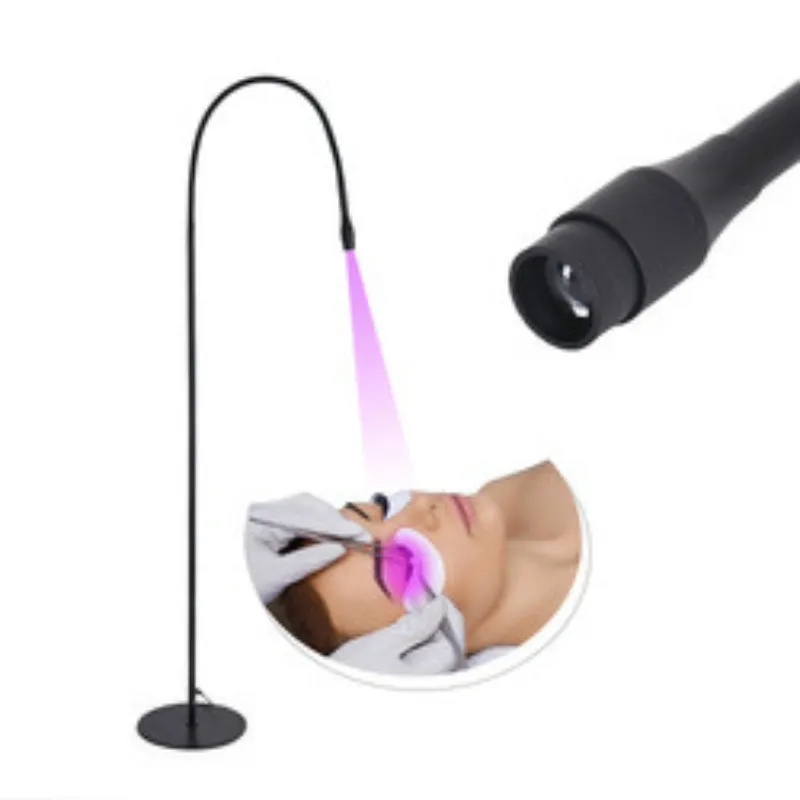
Why a Fast Glue Punishes Slow Placement
Here is the mechanic that makes the ladder matter. A glue drop on the stone is an open chemical reactor. It skins over at the surface first, then turns stringy in the working middle, and finally cures into a disc that no longer wets the natural lash. Press an extension into any stage past its working window and the bond line is compromised before the client leaves the chair.
With a 2-second glue, that failure takes a visible mistake: a pause to answer a question, a fumbled fan, a walk across the room. With a 0.3-second glue, every one of those moments is a compromised placement, and there are hundreds of placements in a full set. This is why fast formulas concentrate in experienced hands. The skill is not in handling the speed; it is in keeping the rhythm that makes the speed work. The practical discipline that keeps any formula inside its window, replacing the working drop on a clock rather than at first stringiness, is covered in the drop-management sections of our cure-chemistry article.
There is a distributor version of this lesson too. When a salon reports “this glue fails”, the first two questions are always the same: what did the room read, and what glue speed is the artist actually using? A 0.3-second formula in the hands of a 2-second technician fails at the speed of technique, not the speed printed on the bottle.
Matching a Formula to Your Client Base
Cure speed is where your product line meets your customers’ habits, so choose it per audience, not per head office preference.
For a training-focused audience, the beginner tier is the honest recommendation. Students need a glue that tolerates learning, and a fast formula sold into a classroom generates complaints that look like quality problems but are pacing problems. For working salons, the intermediate tier is the daily driver in most markets, with the advanced tier as a seasonal or speed-focused upgrade. The professional tier belongs with artists who ask for it by name, usually after outgrowing something slower.
Two adjacent specs travel with the speed choice and deserve the same attention. Fume level matters to sensitive clients; a salon serving many sensitive-eye clients may prefer a compatible tier with a friendlier fume profile over a pure speed upgrade. And the rated humidity range, as discussed above, should match where your clients actually work. When a buyer tells you their glue “worked in the dry season and fails now”, they are not describing a broken bottle; they are describing a speed and humidity mismatch. The fuller decision framework for climate fit lives in our guide to specifying glue performance and its companion article on matching a lash glue line to your market’s climate.
How to Verify a Cure-Speed Claim
Before a claim goes on your packaging, verify it the way the factory does: under stated conditions, with visible evidence.
- Fix the room. Record the humidity and temperature at the work surface where you test. A cure-speed number tested at 45% RH is not a statement about behavior at 70%.
- Standardize the drop. Same stone, same drop size, same working distance, replaced on a fixed clock.
- Test the tier as sold. If you are evaluating the 1–2 second formula, measure placements in that rhythm; do not penalize a mid-tier glue for being slower than the professional tier.
- Count failures, not vibes. Ten drops under the same conditions, counting how many skins or strings before placement completes, gives you a repeatable reading you can compare across batches and suppliers.
This is also the moment to lock the rest of the specification, because speed never travels alone. Set-time observation sits next to viscosity, appearance, and batch traceability in a proper product spec, and the structure for writing those acceptance criteria is in our viscosity acceptance criteria guide. If you are still vetting suppliers when you run these tests, the questions in what to ask a lash glue supplier will slot into the same conversation.
Frequently Asked Questions
Is a faster glue stronger?
No. Cure speed describes the working window, not retention. A 0.3-second glue and a 2-second glue can both deliver full retention when placed inside their windows; outside the window, the faster glue fails sooner because the window arrives sooner.
Why does the same glue feel different between salons?
Because it is different in each room. Humidity and temperature are part of the curing reaction, which is why formulas publish rated humidity ranges. Two salons using the same bottle in different climates are running two different chemistry experiments.
Should a starter brand stock fast or slow glue?
Match the tier to the buyer, and start with the middle-to-slower tiers for broad audiences. Fast formulas sell to experienced artists as an upgrade; sold to everyone, they generate complaints that read as defects and behave like technique.
How do I compare cure-speed claims between two factories?
Ask for the claimed speed with its test conditions, then run the standard-drop test in your own room at your own humidity. Claims tested under controlled conditions can both be true and still rank differently in your market’s air.
The Bottom Line
Cure speed is a working-window specification dressed up as a headline number. Read it with its conditions, match it to your artists’ pace and your clients’ rooms, and verify it with a fixed test before it earns a place on your label. Build your line around two rungs of the ladder, not one, and treat humidity as part of the speed decision rather than a footnote to it. Start with the specification tables on the professional and beginner formula pages, then run the standard-drop test in your own market before you commit to a container.