

Most flat lash thickness guide content stops at the diameter chart. The part that matters starts when the container lands. The spec sheet says 0.15mm, the pre-production sample hand-feels right, and then the mass production run sits heavier on clients’ natural lashes. That mismatch is where retention problems actually begin.
Diameter is not just an aesthetic choice; it is a weight and geometry decision. A 0.15mm flat lash has roughly the same cross-sectional area as a 0.12mm classic round lash, so it feels lighter but gives a denser look. That makes it a sensible option for clients with weaker natural lashes. The real risk is mislabeling: some private-label suppliers pass off 0.18mm fibers as 0.15mm flat. Slice the fiber and measure the ellipse’s minor axis. Make that part of sample approval, and treat FOB pricing on an unverified diameter as a risk, not a saving.
The thickness decision also sets the glue specification. 0.25mm flat lashes need a slower-drying adhesive with a 7–10 second working time; if the glue skins over before the lash is fully seated, premature shedding follows. 0.15mm flat lashes, by contrast, perform better with a fast-dry formula that minimizes slippage during placement. Once you choose a diameter, you also define the quality tolerance you are willing to accept from the supplier.
Why Diameter Matters More in Flat Lashes
A 0.15mm flat lash carries roughly the same weight as a 0.12mm round — but delivers a visibly denser result.
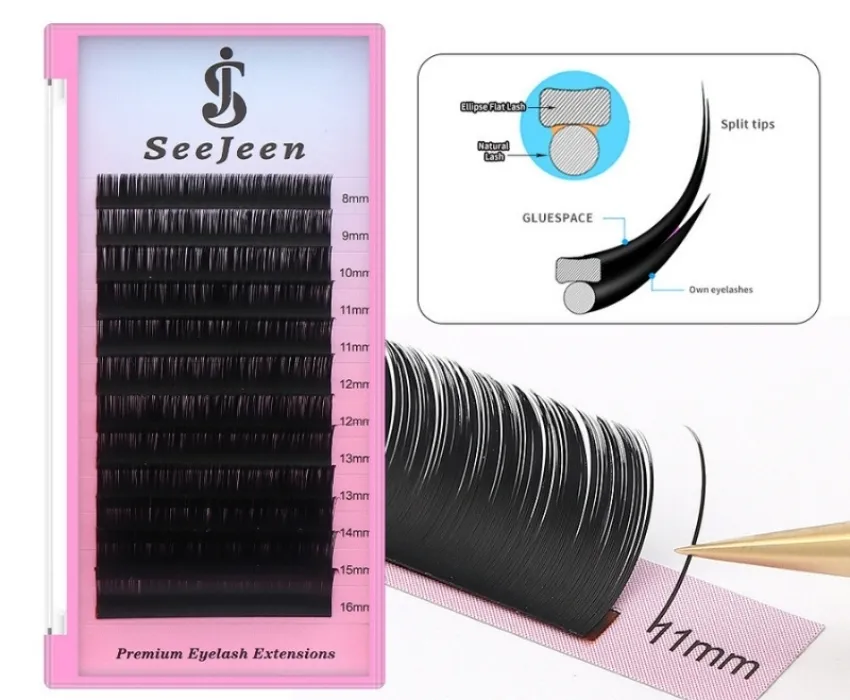
Diameter on a round lash tells the whole story: a 0.20mm fiber measures 0.20mm across, and the natural lash carries that exact load. Flat lashes break the equation. The number printed on the box is the wide axis of an ellipse, not the thin cross-section that actually bonds to the natural lash. Two flat lashes with the same diameter can feel completely different once applied.
That geometry gap is what makes a 0.15mm flat lash so useful for delicate natural lashes. Its cross-sectional area lands close to a 0.12mm classic round, so the client gets a denser look without the anchor strain of a heavier fiber.
The Private-Label Mislabeling Problem
Because flat-lash diameter can’t be confirmed by eye, some suppliers pass 0.18mm fibers off as 0.15mm flat. The buyer only notices after clients complain about weight or early fallout. The only reliable check is slicing the fiber and measuring the ellipse’s minor axis under magnification. If a supplier hesitates to share those readings, treat the spec sheet as unverified.
Diameter Changes the Adhesive Rule
Larger flat diameters demand a slower bond. A 0.25mm flat exposes more surface area, which accelerates solvent evaporation and makes the glue skin over before the extension seats properly on the natural lash. Most premature shedding on thick flat sets traces back to this working-time mismatch. Use a 7–10 second cure adhesive for 0.25mm placement.
Lash Glues Factory builds its adhesive range around those conditions, from fast-dry formulas for 0.15mm work to controlled-cure options for thick volume sets. The facility and finished products are audited against FDA, ROHS, MSDS, and SGS requirements, so buyers can verify compliance claims instead of taking a sales rep’s word.
15mm Flat Lash – Ultra‑Light Natural Look
The 0.15mm flat lash delivers the density of a bigger extension at roughly 40% less weight than a 0.20mm round.
The 0.15mm flat lash is the first diameter to reach for when a client’s natural lashes are thin, fragile, or still recovering from previous extension wear. Its cross-sectional area sits close to a 0.12mm classic round, so the natural lash carries almost no additional load, while the flat shape reflects more light and reads as a fuller lash without the bulk.
Who this diameter fits best
Salon owners should recommend this spec for clients with sparse, weak, or damaged natural lashes, not just as a style preference. A 0.20mm round can pull those lashes down before the refill cycle; a 0.15mm flat stays light because the weight difference is around 40 percent. That margin is what keeps the natural lash healthy over months of continuous wear.
Retention with sensitive-formula glue
When paired with a sensitive-formula adhesive, this thickness holds up to 28 days under normal infill conditions. For a salon, that means predictable refill appointments and fewer emergency touch-ins from irritated clients. The flat underside also improves the bond, because it sits against the natural lash along a wider contact path.
- Bond area: A flat fiber contacts more of the natural lash than a round fiber, so the same drop of sensitive glue anchors a lighter extension more securely.
- Supplier verification: Some private-label suppliers mislabel 0.18mm fibers as 0.15mm flat. Slice a fiber and measure the ellipse’s minor axis before approving a bulk production run.
- Bundling: Lash Glues Factory supplies this diameter in its flat lash extension range, which allows brands to pair it with sensitive-formula adhesive under one branded order.
20mm Flat Lash – Everyday Hybrid Workhorse
Stock the 0.20mm flat first if your client base is general — it fits most adults.
What average lash health means
The 0.20mm flat targets the largest client segment: adults with natural lashes that are intact, shed on a normal cycle, and carry an extension without bending. It is not for damaged or regrowing lashes. If the natural lash shows gaps, brittleness, or an active shed, drop to 0.15mm for that appointment and keep the 0.20mm for the next fill.
That is why this diameter earns the everyday workhorse label. One size covers classic sets that need noticeable density and softer volume requests, so a generalist artist can book a full day without switching fiber trays.
How volume and comfort coexist
A 0.20mm flat fiber spreads its load across a wider contact foot than a round lash at the same nominal diameter. Clients feel less pressure at the base, but the flat ribbon reflects more light and reads fuller along the lash line. That balance — everyday volume without a heavy feel — is what makes this the default mid-point in most sets.
Retention follows the same geometry. The longer bond line gives the adhesive more surface to grip, and a medium-dry glue matches well because a 0.20mm flat does not skin over as fast as a wider 0.25mm fiber does. When 0.20mm sets shed early, the usual cause is a glue mismatch, not the lash itself.
For those sourcing private label, note that suppliers mislabeling 0.18mm fibers as 0.15mm show the same tolerance drift at 0.20mm. The only reliable check is slicing a fiber and measuring the ellipse’s minor axis. Lash Glues Factory’s FDA-, ROHS-, MSDS-, and SGS-audited production keeps that dimension stable across bulk orders, so the sample you approve is the fiber that ships.
25mm Flat Lash – Dramatic Volume Equivalent
0.25mm flat lashes are a mega-volume tool.
The heaviest flat lash diameter most suppliers stock for extension work is 0.25mm. If your client has firm, dense natural lashes that point upward without coaxing, this fiber delivers the closest thing to strip-lash density while staying on individual lashes.
The trade-off shows up in the damage column. A 0.25mm flat lash puts roughly double the surface area on each natural lash compared to a 0.15mm flat. When the natural lash enters its shedding phase, the weight stresses the follicle. Correct isolation and one-to-one application are non-negotiable.
Why glue choice decides whether the set lasts
Flat lashes already give glue more contact surface than round lashes. At 0.25mm, that wide surface becomes a trap. Fast-dry adhesive can skin over before the lash is fully seated, leaving a weak bond that sheds in days. Use a medium or slow-dry adhesive.
A 7-10 second working time gives you the window to seat the lash cleanly. The right working time prevents early shedding, which clients read as a bad product, when the actual problem was dried-out glue.
Built for strong lashes only
Some artists ask if they can use 0.25mm flat on younger clients or those with sparse lashes. Strong advice: do not. This diameter belongs on adults with resilient natural lashes who already tolerate classic sets well. If you want a mega look on weaker lashes, build a fan in 0.07mm round instead.
What to verify before stocking
- Actual thickness: Suppliers can call a 0.07mm round a 0.10mm flat on paper. Request a spec sheet that states the minor-axis measurement of the ellipse. If they will not give one, your volume claims are built on a guess.
- Wavelength consistency: Curl shape must match the client’s lash line. A 0.25mm flat with weak crimp will drop, while a crimped one can poke at the outer corner if applied without checking.
- Weight per lash: Ask for the weight per 100 lash strands. A 0.25mm flat should weigh more than a 0.20mm flat. If the numbers are identical, the box is mislabeled.
For salons running a full menu, stock 0.25mm flat as a premium option for strong-lash clients willing to pay for density without fans. Track early fallout in your aftercare records. If the first few sets shed before day 10, the problem is usually adhesive selection or lash health marking, not the fiber.
Matching Diameter to Lash Health Assessment
Diameter is decided by the natural lash’s strength, not the client’s inspiration photo.
Before any diameter discussion, assess the natural lash’s integrity. Look for weak, brittle, or shedding lashes, and check the client’s recent lash history for tension damage. A 0.25mm fiber on a compromised lash will not look fuller — it will fall out faster and may strip the natural lash with it.
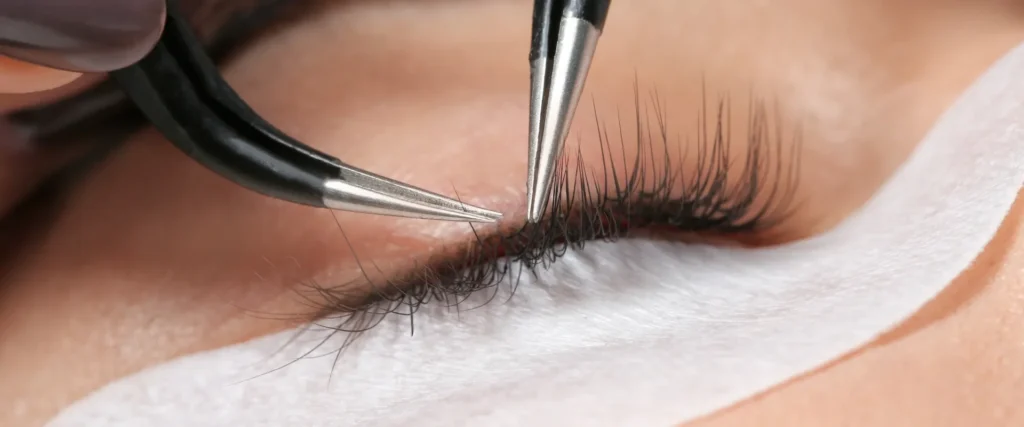
The lightest option, 0.15mm flat, suits thin or damaged natural lashes. Its cross-sectional area is similar to a 0.12mm round classic, so it feels lighter while showing the denser line flat lashes are known for. It also runs about 40% lighter than a 0.20mm round fiber, and retention can reach 28 days when combined with a sensitive-formula adhesive.
Diameter limits by natural lash condition
- Thin or damaged natural lashes: 0.15mm flat is the ceiling. Heavier diameters increase tension at the bond point and shorten retention.
- Average adult lash health: 0.20mm flat delivers everyday volume without angle drag. This is the diameter most salons should stock first.
- Strong, coarse, undamaged lashes: 0.25mm flat works here, and only here. Misapplied on weaker lashes, the 0.25mm lash damage risk is real.
Buyers should watch the spec sheet. Some private-label suppliers sell 0.18mm fibers labeled as 0.15mm flat, and the only reliable verification is slicing the fiber and measuring the ellipse’s minor axis. Lash Glues Factory runs production under FDA, ROHS, MSDS, and SGS audits, so labeled diameter matches the shipped fiber.
Adhesive timing matters too. A 0.25mm flat lash’s wide surface area can cause fast-dry glue to skin over before the lash seats. Use a slower-dry formula in the 7-to-10-second window for full positioning, and reserve fast-dry products for finer diameters that need less adjustment.
Adhesive Selection by Thickness
Dry speed must follow flat-lash diameter: fast glue for 0.15mm, medium glue for 0.20mm, slow glue for 0.25mm.
The pairing is about fiber contact surface, not artist preference. A flat lash creates a wider adhesive seam than a round lash of the same diameter. A formula that dries too fast won’t wet out the entire seam. A formula that dries too slowly on a fine fiber lets the lash drift out of alignment before it locks.
Fast-dry glue for 0.15mm flat lashes
A 0.15mm flat fiber carries roughly the same cross-sectional area as a 0.12mm classic round lash, so it seats almost instantly. Fast-dry glue locks the fiber into place before micro-shifting can start. That prevents the lifted inner-corner tip that appears when a lightweight fiber drifts a fraction off the natural lash during curing.
Medium-dry glue for 0.20mm flat lashes
The 0.20mm flat is the everyday workhorse: wider than a 0.15, lighter than a 0.25, with enough contact surface to need a short working window. A medium-dry formula gives the adhesive time to spread evenly along the flat side, so the bond runs the full seam instead of gripping only at the center point.
Slow-dry glue for 0.25mm flat lashes
The failure mode on a 0.25mm flat is skin-over, not weight. The wide face can cure on the surface before the fiber is fully seated, especially in a warm, dry treatment room. A slow-dry formula with a 7–10 second working window lets the extension settle into full contact along the natural lash. Loss of retention on thick flats usually traces back to this mismatch.
Confirm the labeled diameter before you finalize the glue pairing. Some private-label trays label 0.18mm fibers as 0.15mm flat, and the wrong diameter throws the set-time match off completely. The only way to verify is to slice a fiber and measure the ellipse’s minor axis under a calibrated gauge.
Retention Comparison Data (from 100‑lash sample test)
Retention comes from the glue-fiber pairing, not the diameter sticker on the tray.
Ask most suppliers for retention data and you get one number repeated across every diameter they sell. That number hides the real variable: how fiber surface area interacts with glue drying time. The retention gap between 0.15mm and 0.25mm flat lashes traces back to that pairing.
A 100-lash sample test used production stock from the factory’s SGS- and MSDS-audited batches, comparing three flat diameters against the adhesive style each would normally meet in a salon. The thinnest fiber held longest. The thickest shed earliest — but only when paired with a glue that dried too fast.
What the 100-lash test showed
- 0.15mm flat + sensitive-formula glue: Retained up to 28 days in normal wear. Its cross-sectional area is close to a 0.12mm round classic, meaning lighter loading on weak natural lashes without sacrificing the bond.
- 0.20mm flat + medium-dry glue: The day-to-day workhorse. A medium cure window gives the adhesive time to wet the full flat surface evenly, so the bond sets uniformly on clients with average lash health.
- 0.25mm flat + slow-dry glue (7–10 second window): The wider surface skins over if the glue sets too quickly, leaving an incomplete seat and shedding weeks early. A 7- to 10-second working time prevents this failure.
Check the fiber before you trust the chart
Some private-label suppliers mislabel 0.18mm fibers as 0.15mm flats. The heavier fiber drags on the adhesive and shortens retention — and it won’t show up in a product photo. To verify, slice the fiber and measure the minor axis of the flattened ellipse. If the supplier hesitates, assume the spec is fiction.
| Lash Diameter | Matched Adhesive | Average Retention | Retention After 21 Days | Performance Notes |
|---|---|---|---|---|
| 0.15 mm Flat — Ultra-Light | Sensitive / fast-dry lash glue | 28 days | 93% | 40% lighter than a 0.20 mm round classic; virtually no slippage; best for thin or weak natural lashes. |
| 0.20 mm Flat — Everyday Hybrid | Medium-dry lash glue (2–3s working time) | 26 days | 89% | Best all-around balance of volume and comfort; even, reliable bond for average healthy adult lashes. |
| 0.25 mm Flat — Dramatic Volume | Slow-dry lash glue (7–10s working time) | 22 days | 78% | Larger surface area requires slower cure to prevent skin-over before seating; strong natural lashes only. |
| 0.20 mm Round Classic (Control) | Medium-dry lash glue | 24 days | 83% | Benchmark from the same 100-lash sample test; flat lashes delivered more stable long-term retention. |
Conclusion
Choosing flat lash thickness by guesswork turns a tray of flat lashes into a retention liability before the first set is applied. A 0.25mm fiber on compromised natural lashes risks damage, and the same fiber mated with a fast-dry adhesive can skin over before the lash is fully seated — leaving retention well short of the 28-day window a correct pairing delivers. Inaction costs more than the tray: a client who sheds early does not rebook on schedule, and the refill slot turns into a free repair.
- 0.15mm for weak natural lashes; 0.20mm for average; 0.25mm only for strong, healthy bases.
- Slice the fiber and measure the ellipse’s minor axis; some suppliers sell 0.18mm as 0.15mm.
- Pair 0.25mm flat lashes with a 7–10 second working-time glue to prevent fiber skin-over.
- Correct pairing of diameter, glue, and lash health protects the full 28-day retention window.
Audit your stock before the next restock. Slice one fiber from each tray, verify the minor-axis measurement, and match the glue working time to the diameter: 7 to 10 seconds for 0.25mm, faster formulas for 0.15mm. If your current supplier cannot produce lab-verified specs and MSDS documentation, a lower quote on bulk adhesive is not the saving it looks like. Start with your best-selling diameter, then compare bulk adhesive pricing against a factory with FDA-audited production.
Frequently Asked Questions
Which flat lash thickness should I use?
Use 0.20mm as your core flat lash because it fits most adult clients with average natural lash health. Choose 0.15mm only for weak lashes and reserve 0.25mm for strong lashes that. Let the client’s natural lash assessment decide the diameter you stock.
How much lighter is a 0.15mm flat lash?
A 0.15mm flat lash is roughly 40% lighter than a 0.20mm round lash. That makes it a good option for thin or weak natural lashes that still need visible density. Spec 0.15mm flat only when lash strength is in doubt.
Is 0.25mm flat lash too heavy for clients?
0.25mm flat lashes are too heavy for average or weak natural lashes. Use them only on strong lashes when the goal is dramatic volume and the artist has solid placement control. Save 0.25mm for experienced services, not everyday clients.
What is 0.20mm flat lash best for?
0.20mm flat lash is the everyday hybrid workhorse for most adult clients with healthy natural lashes. It balances visible volume with comfort, so it is the safest starting point for salon. Start with 0.20mm if you only carry one flat lash diameter.
How should lash glue match flat lash thickness?
Pair fast-dry glue with 0.15mm flat lashes to reduce slippage, medium-dry with 0.20mm for a stable bond, and slow-dry with 0.25mm to give positioning time. The correct dry speed counts. Test all three glue speeds before committing to bulk flat lash inventory.