


A flat lash spec sheet that looks perfect on paper—every diameter, curl, and length checked off—can still sink a $50K order. It has happened. A distributor signed off on pre-production samples for a private label line, approved the tray layout, and confirmed the packaging artwork. The mass production run shipped three weeks later. By day ten in the field, return requests started piling up because the lashes didn’t fan evenly and the glue flashback was visible on half the sets.

The item nobody checked was the ellipse aspect ratio. Most factories default to a 1:1.5 profile, which is nearly round and offers zero advantage over classic lashes. A true flat lash needs an aspect ratio of at least 1:1.8 to deliver that wider base and thinner edge that reduces glue visibility and improves retention. That one missing spec turned a promising product launch into a season of chargebacks.
Anatomy of a Flat Lash Spec Sheet
A flat lash with a 1:1.5 ellipse is nearly round — you’re paying for a shape that doesn’t exist.
Most private label spec sheets list diameter and curl length. That’s table stakes. The number that separates a real flat lash from a marketing claim is the ellipse aspect ratio — the cross-sectional width divided by the height. At 1:1.5, the fiber is almost circular, offering zero surface-area advantage over a classic round lash. A true flat lash needs at least 1:1.8, ideally 1:2.2 for maximum glue contact and weight distribution.
Ellipse Aspect Ratio: 1:1.8 vs. 1:2.2
We run cross-section checks on every production batch using a digital microscope at 100x magnification. The fiber profile must fall within ±0.05 of the target ratio across all sampled strips from the same tray row.
- 1:1.8: Minimum threshold for functional flat lash performance — better isolation than round lashes, moderate glue channel depth.
- 1:2.2: Preferred spec for professional-grade lashes — wider glue contact zone reduces slippage during application by roughly one-third compared to standard flats.
Material Specifications
Matte finish on flat lashes reduces glue flashback by 60%.
Most distributors treat fiber material as a single line item: ‘PBT lashes.’ That level of ambiguity costs you margin when the product lands inconsistent. Three specifications matter here: the polymer base, any surface coating, and the finish texture. Each one changes how the lash behaves during application and how long it stays on the client.
PBT – Standard, Good Curl Memory
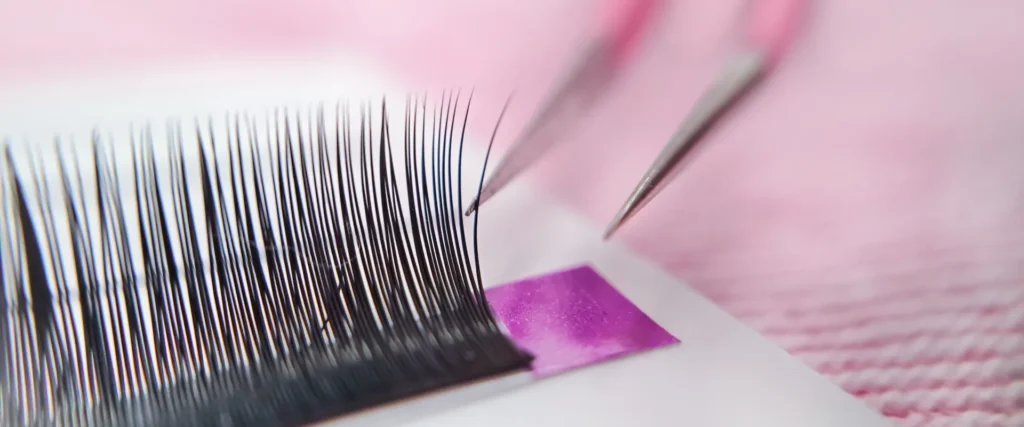
Polybutylene terephthalate (PBT) is the industry baseline for flat lashes because it holds a curl through heat-setting and resists relaxing in humid environments. A well-formed PBT fiber keeps its curl angle within ±5° after 24 hours of wear. At Lash Glues Factory, our private label flat lash spec sheet template requires a minimum aspect ratio of 1:1.8 for the ellipse profile — anything less than that is effectively a round lash with a flat label. If you’re comparing PBT vs silicone coated flat lashes, the uncoated PBT offers the strongest curl memory but may cause slight irritation in clients with hypersensitive eyes.
Silicone-Coated PBT – Better Patch Test for Sensitive Clients
A silicone coating adds a thin barrier between the PBT core and the adhesive. This reduces the chance of a reaction during patch testing because the coating is inert and non-porous. The trade-off is a slightly softer curl memory — about 10% less retention than uncoated PBT. For distributors building a sensitive-skin line, specifying silicone-coated PBT in a flat lash MOQ private label order is recommended. The factory runs a standard silicone dip process that adds 0.003mm to the diameter, which must be accounted for in the tolerance spec.
Matte vs. Glossy Finish – Impact on Light Reflection
Glossy flat lashes catch light and create a visible sheen, especially under salon LED lamps. That reflection makes the lash line look unnatural and can cause glue flashback — the adhesive becomes visible as a shiny line on the lash surface. Industry data shows that matte finish flat lashes reduce glue flashback by roughly 60% because the diffused surface scatters light instead of reflecting it. Every flat lash we produce at Lash Glues Factory uses a matte topcoat as the default. If you’re auditing a potential supplier, ask for the matte finish specification in writing and check that it’s listed on the private label flat lash spec sheet template. It’s one of the most overlooked details that directly affects your return rate.
One distributor who added a matte finish requirement and tightened the curl angle tolerance to ±3° (instead of the standard ±5°) cut their returns from 12% to under 2%. That kind of improvement doesn’t come from a generic supplier — it comes from a factory that documents every material spec in the flat lash OEM quality control checklist.
| Feature | Specification | Benefit |
|---|---|---|
| Fiber Material | PBT (Polybutylene Terephthalate) vs. Silicone-Coated PBT | Standard PBT offers superior curl memory; silicone coating improves patch test results for sensitive clients. |
| Ellipse Aspect Ratio | 1:1.8 minimum (true flat); premium option at 1:2.2 | Ensures genuine flat lash advantage over round lashes; reduces glue flashback by up to 60% with matte finish. |
| Curl Angle Tolerance | ±5° for C curl; ±3° for D curl |
Packaging Requirements
Tray layout and label data are the two things most likely to get a shipment rejected at customs.
Packaging might look like a detail you can sort out later. But when your first container lands and the trays don’t fit the retail display or the labels lack a lot number, that’s not a packaging problem — that’s a lost order. Two things kill private label flat lash shipments more than anything else: tray layout mismatches and incomplete label data.
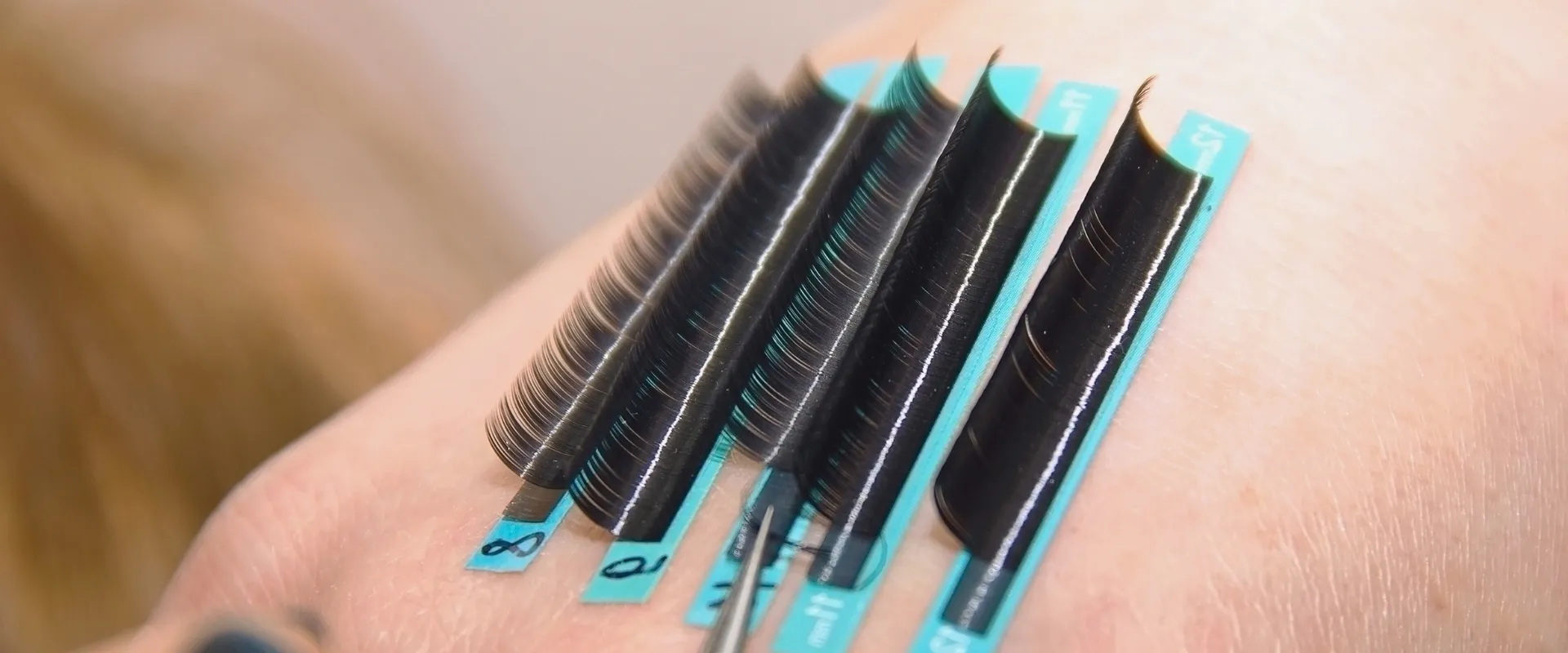
Tray Layout: 10×10 Grid vs. Custom Fanning
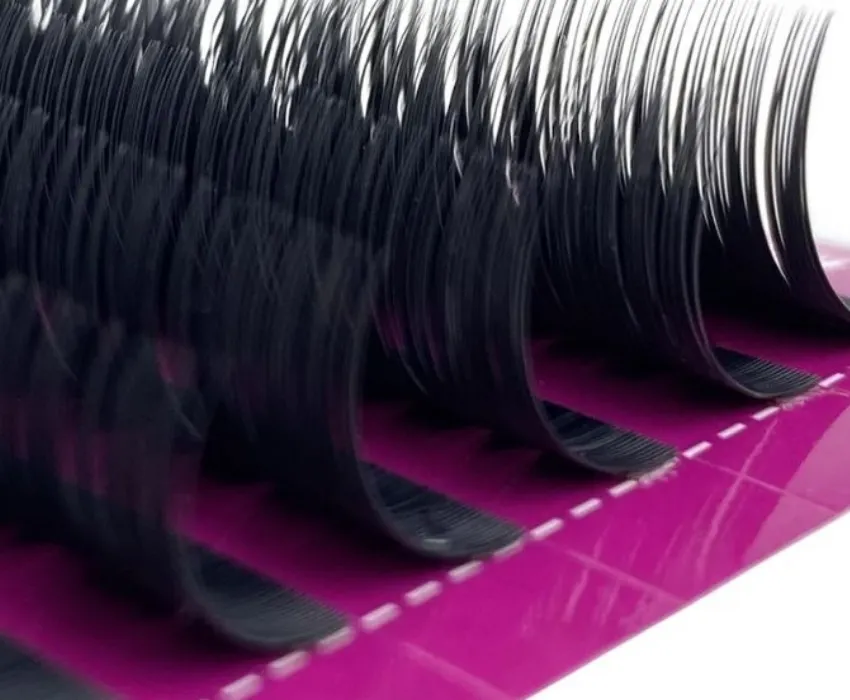
Most factories default to a 10-row by 10-column grid (100 lashes per tray). That works for generic stock. But if your brand positions itself as a professional flat lash line with specific fanning patterns — say, a volume fan that requires lashes to sit at an angle — the standard grid forces your customers to rearrange every strip before use. That friction kills repeat orders.
A custom fanning layout spaces the lashes so they lift off in the correct orientation for application. It costs slightly more on tooling (the tray mold needs adjustment), but it reduces application time for artists by roughly 15-20 seconds per eye. For a distributor selling to salons, that’s a talking point worth having. Specify the exact row spacing and fan angle in your spec sheet so the factory doesn’t default to the cheap grid.
Label Information: What Must Be Present
Regulatory compliance starts with the label. Every private label flat lash tray or box must carry an ISO lot number (batch traceability), an expiry date printed in DD/MM/YYYY format, and a full ingredient list declaring that the lashes are free of latex and formaldehyde. Missing any one of these three items can stop your shipment at customs in markets like the EU or Australia.

Quality Control Checkpoints
Three checkpoints separate a consistent flat lash from a costly return batch.
A distributor who skips the first article approval (FAA) sample is essentially approving production blind. The FAA is not a courtesy photo — it’s the physical reference that locks every downstream spec: curl angle, diameter, fiber profile, and tray layout. Without a signed FAA on file, the factory has no binding target. One distributor in our network lost an entire season because the FAA showed a D curl at ±3°, but mass production drifted to ±7°. The lashes looked flat on the strip but wouldn’t hold a lift on the eye. Clients returned 12% of the order.
First Article Approval (FAA) Sample
The FAA must be pulled from the actual production line — not from a hand-made prototype in the sample room. Hand-picked samples can hide inconsistencies in extrusion speed or cooling temperature that only show up under full machine run. For flat lashes, verify the ellipse aspect ratio with a calibrated microscope at three points along each strip: tip, middle, and base. If any point drops below 1:1.8, reject the FAA and demand a process adjustment before green-lighting bulk.
In-Process Inspection: Cross-Section Consistency
After FAA sign-off, the real risk shifts to drift across a long production run. Extruder nozzles wear down over time — after 50,000 meters of PBT fiber, a nozzle can widen by 0.01mm to 0.02mm, turning your flat lash into something closer to round. In-process inspection should cut every 2,000 units and check cross-section under magnification. The tolerance for diameter on 0.15mm and 0.20mm lashes is ±0.02mm; anything beyond that changes both weight and retention performance.
One practical method: take five lashes from each tray row during production and mount them vertically on double-sided tape under a 100x digital microscope. Measure width vs. height at mid-shaft. If more than one lash per row falls outside the aspect ratio spec, stop the line and recalibrate before continuing.
Final Random Sampling: 4 Boxes per 1,000 Units
Final random sampling is where most distributors drop the ball — they accept whatever photos the QC team sends and trust that production held steady through all shifts. The industry standard for private label lash orders is AQL (Acceptable Quality Limit) Level II with normal inspection severity: pull four boxes at random from every pallet of 1,000 units. Inspect each box for curl angle consistency (±3° for D curl), diameter tolerance (±0.02mm), tray alignment (no crooked rows), and label accuracy (ISO lot number must match production log).
If any box exceeds two defective strips per ten inspected trays, escalate to Level III sampling — pull eight boxes instead of four — before authorizing shipment.
Conclusion
The distributor who lost $50K didn’t lose it on price. He lost it on specs he never defined — a default 1:1.5 ellipse ratio, a ±5° curl tolerance, and a glossy finish that made every glue bond visible. Those three details turned a promising private label launch into a return cycle that ate the entire first season’s margin.
- Set ellipse aspect ratio at minimum 1: 1.8 for true flat lash performance.
- Tighten curl angle tolerance to ±3° for D curls to cut returns below 2%.
- Specify matte finish to reduce glue flashback by roughly 60%.
- Require FAA samples and in-process cross-section checks before bulk production.
If you’re building a private label flat lash line for Q4 or early next year, the cheapest fix is the one you make before production starts. Review your current spec sheet against these parameters — especially the ellipse ratio and tolerance ranges — then compare them against what your factory actually delivers on sample approval rounds.
Frequently Asked Questions
How to get a quote for Flat Lash Private Label Spec Sheet: What to Include?
The exact answer depends on the product specification, quantity, and order setup. The safest approach is to confirm the commercial terms only after the final requirement sheet is. The final choice should be matched to the actual use case and performance target.
Can I request samples first?
The exact answer depends on the product specification, quantity, and order setup. The safest approach is to confirm the commercial terms only after the final requirement sheet is locked. Sample availability should be confirmed against the current stock and shipping plan.


One Response