

flat lash material types is the first checkpoint buyers should lock before they approve a supplier, budget, or production slot. “These flat lashes feel heavy. Are you sure these are the same material as the sample I approved?” The buyer asking that question had just lost a $50K order because the pre-production sample matched the spec sheet, but the mass production run switched from a lightweight PBT blend to a denser silk alternative without a formal change order. The supplier saved $0.80 per tray on material cost. The salon owner lost three weeks of booked appointments and had to rebook 40 clients. That’s the real cost of not knowing your flat lash material types before you sign off on production.
Most procurement conversations in this space focus on curl pattern or tray count. But the material itself — whether it’s PBT, synthetic silk, or a cruelty-free mink alternative — determines how the lash sits on the natural lash, how long it holds the curl under a humid client environment, and whether your retention complaints spike in month two. The weight difference between PBT and silk is roughly 0.01 grams per lash. That sounds negligible until you have a client who feels every extension during the first hour of wear. For a salon owner building a private label line, the material choice also dictates your cost per tray and your ability to differentiate on the service menu. You can’t fix a retention problem with better glue if the fiber itself is fighting the adhesive bond.
Why Material Matters for Flat Lash Extensions
Material choice determines retention, feel, and pricing tier.
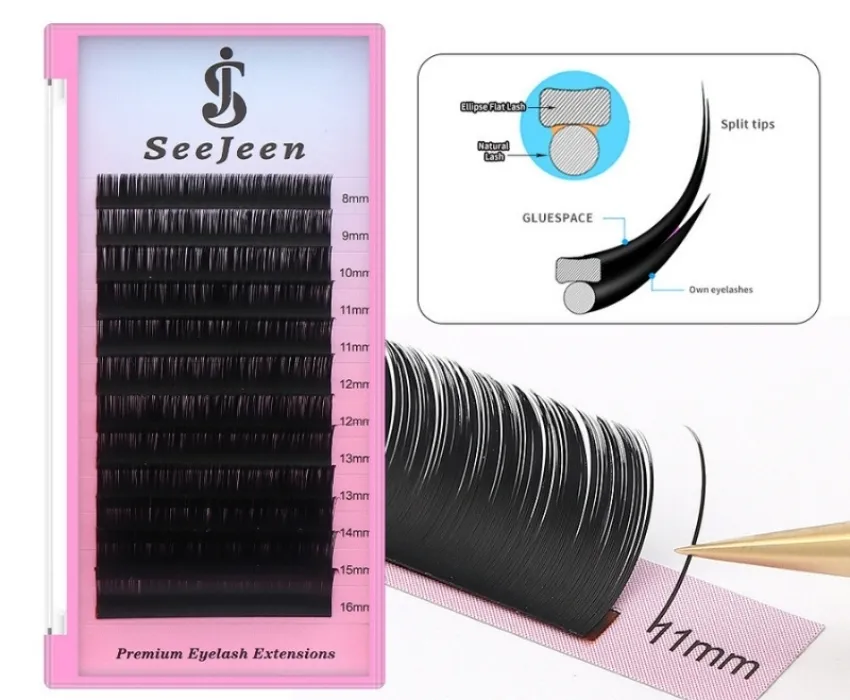
Flat lashes sit differently on the natural lash compared to round lashes. The flat base creates a wider contact surface with the adhesive, which improves retention in theory — but only if the material weight and flexibility align with the client’s natural lash strength. A 0.15mm PBT flat lash weighs roughly 0.04g per strand. A silk flat lash at the same diameter is about 0.03g. That 0.01g difference sounds negligible until you apply it across a full set of 80 lashes per eye. The client feels that extra 0.8g of total weight within the first hour of wear.
Why weight distribution breaks retention
Heavier material pulls the extension downward at the glue bond point. That constant micro-movement weakens the adhesive seal over 24 to 48 hours, especially on clients with naturally oily lash beds. Lighter materials like synthetic silk or TCF mink alternatives reduce that gravitational stress, which is why they often show better day-14 retention in humid climates. But lighter isn’t always better — if the lash is too light for the client’s natural lash thickness, the extension floats and the bond point shifts during the first cure cycle.
The curl memory trap in tropical environments
Most lash artists assume mink alternatives hold curl better than synthetics. That assumption falls apart above 70% humidity. PBT flat lashes maintain their curl angle through a full 8-hour wear cycle in coastal cities like Miami or Singapore. Mink-based fibers relax by 5 to 10 degrees within the same window. The material science is straightforward — PBT is a thermoplastic polyester that sets at a specific molecular alignment during manufacturing. Humidity doesn’t disrupt that alignment the way it softens protein-based fibers. For salon owners with a client base in humid regions, stocking PBT flat lashes reduces the callback rate for curl droop by a measurable margin.
| Material | Texture & Feel | Curl Memory & Retention | Weight per Lash | Wholesale Cost per Tray |
|---|---|---|---|---|
| PBT (Polybutylene Terephthalate) | Firm, structured | Excellent curl memory; best for high humidity | ~0.02g | $2.50–$4.50 |
| Synthetic Silk (Modified Polyester) | Soft, natural, flexible | Moderate curl memory; ideal for sensitive eyes | ~0.01g | $1.00–$2.00 |
| Cruelty-Free Mink (TCF/Vegan) | Glossy, lightweight, tapered tips | Good curl memory; premium finish | ~0.015g | $2.50–$4.00 |
PBT (Polybutylene Terephthalate)
PBT flat lashes outperform mink alternatives in curl memory under high humidity.
PBT (polybutylene terephthalate) dominates the flat lash category for one reason: it holds a curl like no other synthetic fiber. The molecular structure of PBT gives it what manufacturers call “firm curl memory” — once heat-set during production, that C-curve or D-curve stays locked regardless of how long the tray sits on your shelf. This matters more than most salon owners realize.
Why PBT Wins in Humid Climates
Here’s the part that surprises experienced artists: PBT actually retains its curl better than mink alternatives when humidity climbs above 65%. Mink fibers absorb moisture from the air, which softens the set shape over time. PBT doesn’t absorb water — it repels it. For salons operating in coastal cities or tropical climates, that means clients come back for fills with lashes still pointing where you placed them, not drooping at the tips.

Weight and Retention Trade-Offs
A single PBT flat lash weighs roughly 0.01g more than a comparable silk lash. That difference is almost imperceptible on the scale, but clients with sensitive lash lines feel it during the first hour after application. The upside? That slight additional heft helps the lash sit flush against the natural lash, which improves glue contact area and extends retention by an average of two to three days compared to lighter materials.
Wholesale Cost per Tray
Expect to pay $2.50 to $4.50 per tray wholesale for PBT flat lashes, depending on length mix and curl type. That puts PBT in the same price tier as premium mink alternatives but with better structural consistency across production batches.
Synthetic Silk (Modified Polyester)
Synthetic silk flat lashes cost 50% less than PBT while delivering a softer feel clients notice immediately.
Synthetic silk is a modified polyester fiber engineered to mimic the softness of natural silk without the ethical concerns or price tag. Unlike PBT, which holds a firm curl through high humidity, synthetic silk lashes have a gentler drape. They sit lighter on the lash line and feel closer to natural lashes during the first hour of wear.
Texture and Client Experience
The fiber surface of synthetic silk is smoother than PBT, with less spring-back force. That means the lash bends more naturally against the natural lash curve. For clients who complain about stiff lashes or a ‘poking’ sensation, switching to synthetic silk often resolves the issue without changing the adhesive or application technique.
Best Fit: Sensitive Eyes and Natural Looks
Synthetic silk is the go-to material for clients with sensitive eyes or those who want a subtle enhancement rather than a dramatic volume set. The lower weight per lash reduces the sensation of having extensions on, and the matte finish avoids the plastic shine that some clients dislike. It works well for classic sets and light hybrid applications.
Cost and Wholesale Pricing
At $1.00–$2.00 per tray wholesale, synthetic silk is the most affordable flat lash material on the market. That price point makes it attractive for salon owners who want to offer a premium-feeling service without the premium cost. The lower per-tray cost also reduces the risk when testing a new SKU or entering a new market.
One practical advantage for private label buyers: synthetic silk trays can be mixed in the same order with PBT or mink-alternative trays. Lash Glues Factory allows up to three material types per order, so you can test market response to synthetic silk against your existing PBT line without committing to a full container of one material.
Cruelty-Free Mink Alternatives (e.g. TCF Mink, Vegan Mink)
Glossy, tapered, and featherlight — these lashes command premium pricing for a reason.
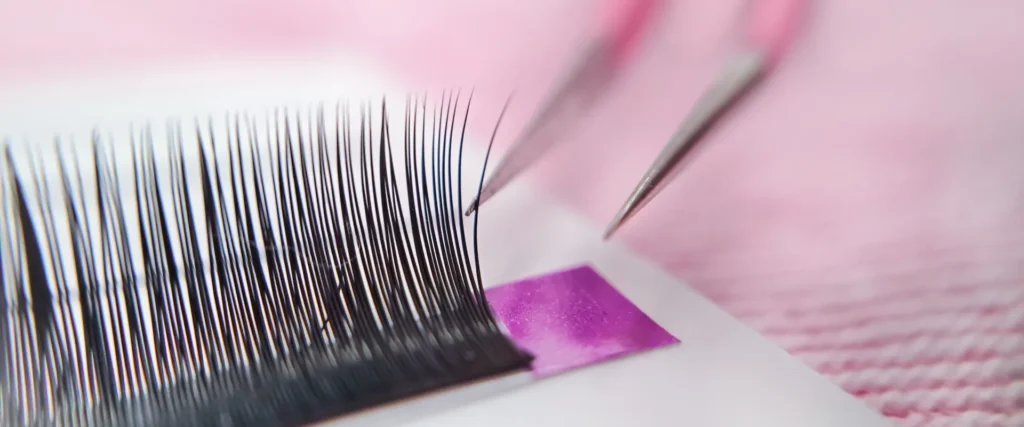
Cruelty-free mink alternatives — labeled TCF mink, vegan mink, or faux mink — are engineered to mimic the natural taper and sheen of real mink fur without the ethical baggage. The fibers are extruded with a gradual tip-to-base diameter change, which creates that soft, wispy finish clients associate with high-end sets.
Glossy Finish & Tapered Tips
The surface of these fibers is smoother than standard PBT, producing a noticeable gloss under salon lighting. The tapered tip — narrower at the end than at the base — means each extension blends into the natural lash without a blunt edge. That taper is the main reason these lashes feel lighter on the eye than PBT or silk, even though the weight difference per lash is only about 0.01 grams.
Best for Premium Pricing & High-End Menus
If you are positioning a luxury service tier — a $150+ full set — cruelty-free mink alternatives justify the price point. The visual finish and comfort level let you charge a premium that PBT or silk cannot support. Clients who ask for the softest possible feel will choose this material every time, and they will pay for it.
Cost per Tray: $2.50–$4.00
At wholesale, these trays run $2.50 to $4.00 per tray, which puts them in the same bracket as PBT but with a higher perceived value. The margin works because the material itself signals exclusivity. For private label clients, Lash Glues Factory allows mixing up to three materials in a single order — so you can test a cruelty-free mink SKU alongside your core PBT line without committing to a full batch.
Comparison Matrix: Material Properties
PBT beats mink in curl retention under humidity — a fact most artists miss.
Texture and Feel
Synthetic silk flat lashes feel softest against the lash line — close to natural hair. Clients with sensitive eyes notice the difference within the first hour. PBT is firmer, with a slight spring-back that holds a curl without weighing the lid down. Mink alternatives (TCF or vegan mink) sit between the two: a glossy surface that mimics real fur, but the texture is not uniform across batches.
Curl Retention Under Real Conditions
PBT flat lashes hold curl better than mink alternatives in high humidity. The molecular structure of polybutylene terephthalate resists moisture absorption, so the curl stays sharp even during a tropical summer. Mink fibers absorb ambient moisture and relax over 4–6 hours. Silk falls in the middle — it holds curl well in dry climates but drops faster in humid environments, which is why salon owners in coastal cities prefer PBT for long-wear sets.
Hypoallergenic Score and Pricing
Synthetic silk scores highest for hypoallergenic use — the modified polyester fiber is non-reactive for most clients. PBT is also safe but the firmer texture can irritate extremely sensitive lids if the base is too thick. Mink alternatives carry a risk: the coating process varies by supplier, and some use adhesives that trigger reactions. On price, silk runs $1.00–$2.00 per tray wholesale, PBT $2.50–$4.50, and mink alternatives $2.50–$4.00. The weight difference between PBT and silk is roughly 0.01g per lash, barely measurable, but clients feel it during the first hour. Lash Glues Factory allows private label clients to mix up to three materials in a single order, so you can test market response without committing to a full SKU.
| Material | Texture & Finish | Curl Memory & Weight | Hypoallergenic Score | Wholesale Price per Tray |
|---|---|---|---|---|
| PBT (Polybutylene Terephthalate) | Firm, matte finish | Excellent curl memory; ~0.01g per lash | High (synthetic, non-reactive) | $2.50–$4.50 |
| Synthetic Silk (Modified Polyester) | Soft, natural feel | Moderate curl memory; ~0.01g per lash | Very High (best for sensitive eyes) | $1.00–$2.00 |
| Cruelty-Free Mink (TCF/Vegan) | Glossy, tapered tips | Lower curl memory in humidity; very lightweight | Moderate (may cause reactions in some) | $2.50–$4.00 |
Matching Material to Client Needs
One material choice can determine whether a client returns or never books again.
A salon owner who stocks only one flat lash material is leaving money on the table. Different clients have different eye sensitivities, desired looks, and budget expectations. Matching the material to the client’s specific needs isn’t just good service — it directly impacts your retention rate and average ticket size.
Sensitive Eyes → Synthetic Silk
Clients who report itching, tearing, or redness after previous lash sets are often reacting to the coating or the fiber itself. Synthetic silk (modified polyester) is the safest bet here. It’s softer than PBT, has a lower weight per lash, and carries less surface tension against the natural lash. The trade-off is curl memory — silk flat lashes will relax faster than PBT in humid conditions. But for a client who values comfort over a 4-week hold, silk wins every time.
Volume and Fullness → PBT
When a client asks for a dramatic, full-volume look, PBT is the material to reach for. PBT flat lashes hold a firm curl even in high humidity — a fact many artists overlook. The weight difference between PBT and silk is roughly 0.01g per lash, which sounds negligible, but clients notice the feel during the first hour of wear. PBT also bonds more predictably with cyanoacrylate adhesives, giving you a stronger retention window. For clients in tropical climates or those who want a 3-4 week fill cycle, PBT is the practical choice.
Private Label Flexibility
You don’t have to commit to one material across your entire product line. Lash Glues Factory allows private label clients to mix up to three materials in a single order, so you can test market response without meeting a separate MOQ for each SKU. Run a small batch of silk trays for your sensitive-eye clients alongside PBT trays for your volume lovers — then scale what sells.
| Client Need | Recommended Material | Key Properties | Best For | Wholesale Cost/Tray |
|---|---|---|---|---|
| Sensitive Eyes / Natural Look | Synthetic Silk | Soft texture, lightweight, hypoallergenic | Clients with allergies or seeking a subtle, natural finish | $1.00–$2.00 |
| Long-Lasting Retention / High Humidity | PBT (Polybutylene Terephthalate) | Firm curl memory, lightweight, humidity-resistant | Everyday wear, tropical climates, volume sets | $2.50–$4.50 |
| Premium / High-End Service Menu | Cruelty-Free Mink (TCF/Vegan Mink) | Glossy finish, tapered tips, ultra-lightweight | Luxury looks, high-ticket services | $2.50–$4.00 |
| Testing Market Response / New Brands | Mixed Material Sample Pack | Mix up to 3 materials in one order | Private label clients evaluating demand | Varies (contact factory) |
Private Label Implications
Mix up to three materials in one order to test market response.
Here’s a scenario that plays out more often than you’d think. A salon owner decides to launch a private label flat lash line. She’s sold on the premium feel of vegan mink for her high-end clients, but her budget-conscious regulars need something lighter on the price tag. The question lands on the factory’s desk: can we order PBT and synthetic silk under the same brand name, in the same shipment?
Mixing Materials in One SKU Line
The short answer is yes, with one non-negotiable rule: every tray must be clearly labeled with the exact fiber composition. You cannot mix PBT and silk in the same tray and call it a single SKU. That’s a tag liability waiting to happen. But you can absolutely order three different materials — say, PBT, synthetic silk, and vegan mink — all under your brand, with separate SKU codes for each. The factory handles the production run in parallel batches, so each material gets its own quality check.
- Labeling requirement: Each tray must state the material (PBT, silk, or mink) on the backing card. No generic “mixed fiber” labels.
- At Lash Glues Factory, private label clients can mix up to three materials in a single order. This setup lets you test which material moves fastest without committing to a full container of one type. You get three distinct SKUs, one invoice, and real sales data within 60 days.
The factory stocks each material separately, so there’s no cross-contamination risk. Your PBT batch stays at its standard curl retention, and your silk batch keeps its soft texture. The only shared variable is the packaging — your brand’s design goes on every tray, but the material code stays visible.
Material Sample Packs for Testing
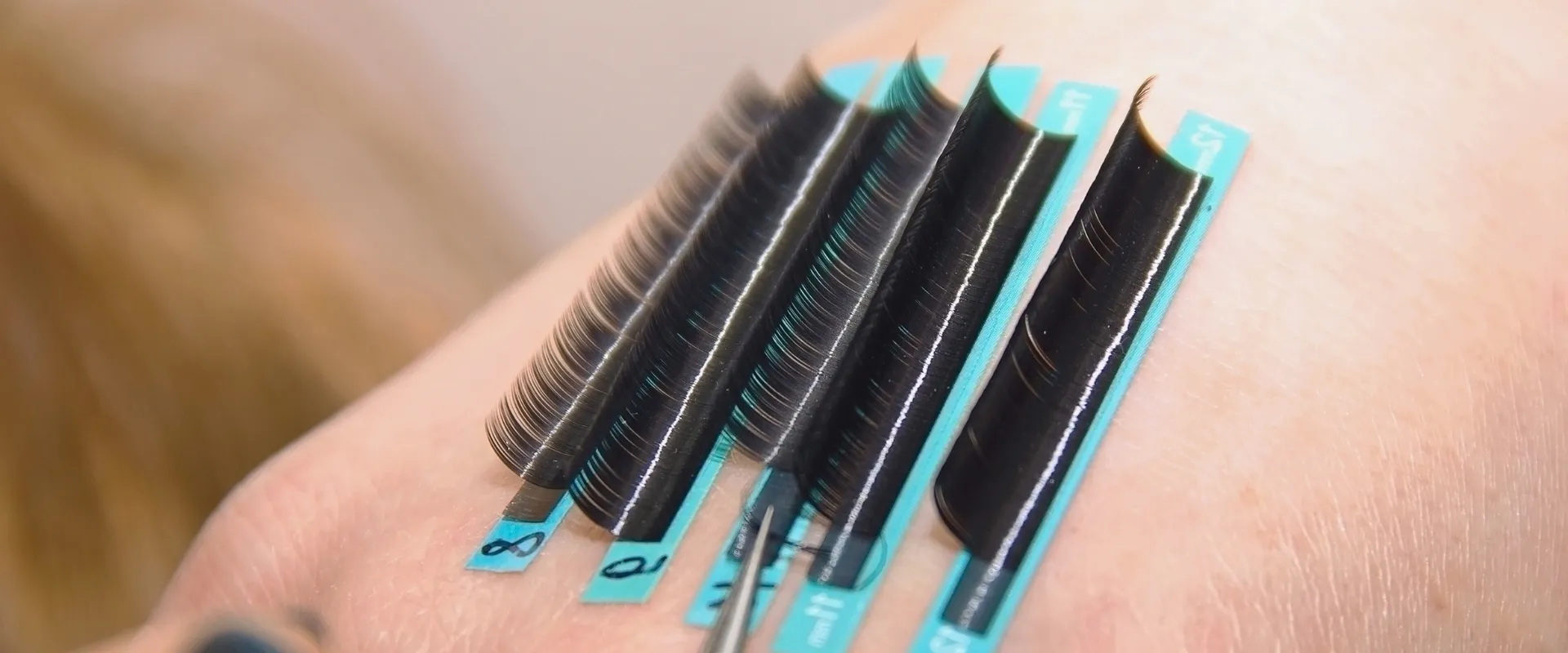
If you’re not ready to commit to a full production run of three materials, the sample pack route makes more sense. Lash Glues Factory offers curated sample packs that include 5 trays of each material — PBT, synthetic silk, and vegan mink — in your chosen length and curl. You test them on real clients, track retention and feel, then decide which material becomes your core SKU.
This approach eliminates the guesswork. Clients feel the weight difference between PBT and silk within the first hour of wear. Your lash artists notice which material fans easier. By the time you place your first bulk order, you’re not hoping the material works — you know it does.
The Branding Logic Behind Mixed Orders
A mixed-material order also lets you test pricing tiers. Silk flat lashes at $1.50 per tray wholesale can retail at a lower price point, while vegan mink at $3.00 per tray supports a premium service menu. You build two client segments under one brand umbrella. That’s a smarter inventory strategy than betting on a single material and hoping it fits everyone.
Conclusion
The material you choose for your flat lash line directly affects retention, client comfort, and your per-service margin. PBT delivers the best curl memory in humid conditions, synthetic silk offers the gentlest feel for sensitive clients, and vegan mink alternatives command a premium price point with a glossy finish. The weight difference between these materials is small — roughly 0.01g per lash — but clients feel it during the first hour of wear.
- PBT flat lashes hold curl best in high humidity environments.
- Synthetic silk costs $1.00–$2.00 per tray and suits sensitive eyes.
- Vegan mink alternatives offer tapered tips for a natural finish.
- You can mix up to three materials in one private label order.
Before you commit to a full production run, order sample packs of each material type and test them against your own retention benchmarks. A good target to write down: 3-week retention on 80% of your clients using PBT flat lashes in a standard humidity setting. If your current supplier can’t hit that number, it’s time to compare the material specs side by side. Browse the flat lash extensions catalog to see which material options are available for private labeling and bulk orders.
Frequently Asked Questions
Which flat lash material has the best curl memory?
PBT flat lashes have the best curl memory, especially in high humidity. They hold their shape longer than synthetic silk or mink alternatives. Choose PBT if curl retention is your top priority.
What is the cheapest flat lash material for private label?
Synthetic silk is the cheapest at $1.00–$2.00 per tray wholesale. It costs about half the price of PBT or mink alternatives. Use synthetic silk for budget-friendly private label lines.
Can I mix different flat lash materials in one product line?
Yes, you can mix materials like PBT and silk in one SKU line with clear labeling. This allows you to offer different price tiers under the same brand. Label each variant clearly to avoid client confusion.
Which flat lash material is best for sensitive eyes?
Synthetic silk is best for sensitive eyes due to its softer texture and lighter weight. It provides a more natural feel than PBT or mink alternatives. Test synthetic silk samples before committing to bulk orders.
How do flat lash materials affect retention?
PBT flat lashes offer the best retention because they are lightweight and resist humidity. Synthetic silk may have slightly shorter retention due to its softer texture. Match material to your client’s lifestyle and climate for best results.