


A distributor known to an analyst placed a $50K order for a private label UV lash glue after the pre-production sample tested perfectly. The supplier confirmed the uv lash glue formulation matched — same cure speed, same viscosity. Three weeks after the bulk container landed, lash artists started complaining the glue wasn’t curing under the LED lamp the way the sample did. The supplier’s response? “Same recipe, different batch.”.
That’s when the distributor learned the hard way that formulation stability across production runs is the real measure of a factory. Viscosity drifts, cure speed shifts, and photoinitiator concentrations vary if the raw material sourcing or compounding process isn’t locked down. A single point change in a stabilizer or a switch from a polymeric flexibilizer to a phthalate-based plasticizer can turn a reliable private label glue into a return problem.
This guide walks through the three specs that separate a trustworthy UV lash glue supplier from one you’ll have to replace after one season: viscosity grades, cure speed profiles, and the TPO-free debate. If you’re evaluating factories for a bulk or private label run, these are the details that prevent a $50K repeat.
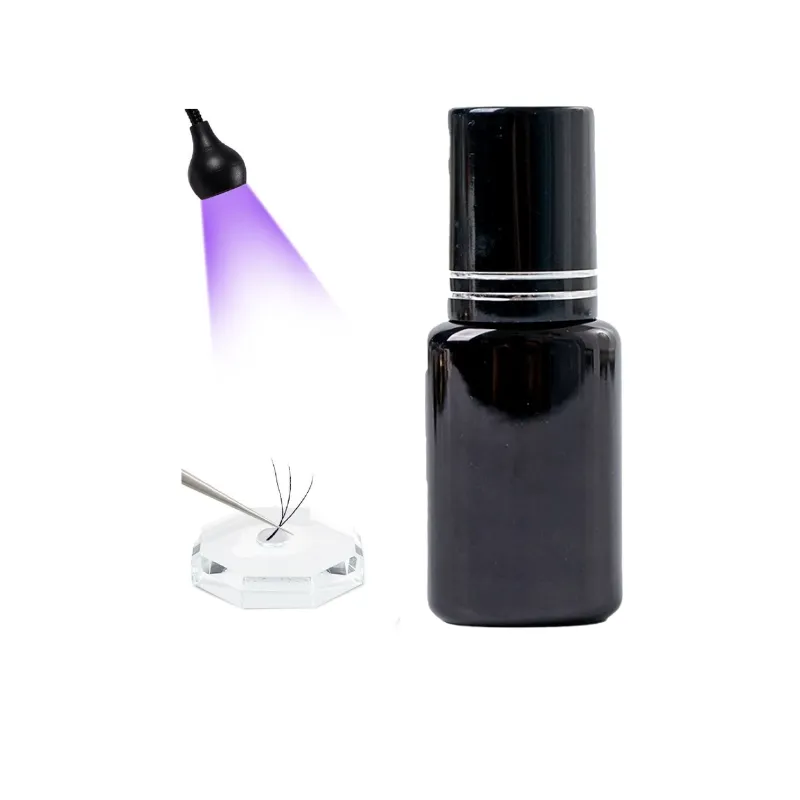
Why Formulation Chemistry Matters for Your Private Label Brand
The wrong viscosity or cure speed turns a premium UV lash glue into a disaster for your brand.
Viscosity: Thin Flowing vs Thick Non-Drip
Viscosity determines how the glue behaves on the lash strip. Thin-flowing formulas (5–15 cPs) soak into natural lashes quickly, making them ideal for fans and volume sets. Thick non-drip formulas (50–100 cPs) stay on the lash without running, better for classic applications. Choose wrong, and your clients fight with messy applications or poor retention.
- Thin (5–15 cPs): Spreads fast, great for volume lash artists, but risks over-application and irritation if not precise.
- Thick (50–100 cPs): Stays put, better for beginners, but can create visible glue line if not cured immediately.
- Cure Speed Profiles: Matching Drying Time to Lash Artist Skill Level
- Cure speed is the time from application to fully set. A 0.5-second UV cure suits advanced artists who work fast; it minimizes client wait time. A 3-second cure gives more working time for slow or meticulous application. Using the wrong speed causes rework or failed sets.
- 0.5–1 second: For experienced artists; high throughput, low margin for error.
- 2–3 seconds: For beginners or sensitive clients; allows adjustment, reduces risk of eye closure.
Lash Glues Factory tests every formulation for hot melt stability at 50°C, ensuring viscosity and cure speed remain consistent even after container shipping through hot climates. This pre-shipment thermal cycling test is a reliability marker that separates premium private label suppliers from importers who cut corners. Request a sample to verify the spec matches your market.
The TPO-Free Movement: EU Regulations, Skin Sensitization Risks, and Market Demand
TPO-free is not one standard — verify the actual replacement photoinitiator through MSDS and patch test data.
TPO (Diphenyl(2,4,6-trimethylbenzoyl)phosphine oxide) is a photoinitiator commonly used in UV-curable adhesives. It absorbs UV energy and kicks off polymerization. The problem? TPO is a known skin sensitizer. The EU’s REACH regulations have tightened restrictions on sensitizing substances in cosmetic-adjacent products, and several European beauty distributors now require proof that lash adhesives contain no TPO or other classified allergens.
What is TPO and Why Are Brands Moving Away from It?
Market pressure is real. After the EU’s 2023 update to Annex VI of the CLP regulation, TPO was reclassified as a Skin Sensitizer Category 1B. This means any product sold in the EU containing TPO above 0.1% must carry hazard labeling. For a private label brand selling to European salons, that label alone kills shelf appeal. But the shift is not just regulatory. Lash artists report higher rates of adhesive contact dermatitis when using TPO-based UV glues. Some supplier alternatives remove the photoinitiator entirely — a technology called UVCA (UV Curing Adhesive without photoinitiator). Others swap TPO for less-studied molecules like BAPO (Bis(2,4,6-trimethylbenzoyl)phenylphosphineoxide). A BAPO vs TPO photoinitiator safety comparison reveals that BAPO also carries sensitization warnings in some jurisdictions. The safest route requires full toxicology data, not just a label change.
How to Verify a Supplier’s TPO-Free Claim (MSDS Checks)
A supplier stamping ‘TPO-Free’ on a product page is marketing, not evidence. Here is how a beauty distributor validates the claim. First, request the full Material Safety Data Sheet (MSDS) and look under Section 3: Composition/Information on Ingredients. TPO will be listed as Diphenyl(2,4,6-trimethylbenzoyl)phosphine oxide or CAS No. 75980-60-8. If the MSDS uses the generic phrase ‘proprietary blend’ without listing CAS numbers, that is a red flag. Second, ask for a complete INCI list suitable for cosmetic product notification in the EU. A genuine TPO-free UV lash adhesive will show no ingredient falling under the sensitizer classification. Third, demand human repeat insult patch test (HRIPT) data. A supplier that runs true sensitization tests will share the summary report. At Lash Glues Factory, every private label UV glue order receives a full INCI list and the option for third-party HRIPT data — no proprietary blend shortcuts. When you request a bulk UV lash glue sample, ask specifically for the MSDS and patch test results before approving the formula.
One more check most buyers miss: verify the supplier’s ‘hot melt’ stability at 50°C. Many import glues separate into oil and resin layers during container shipping through hot climates. A factory that pre-shipment tests at that temperature and shares the viscosity-rebound graphs is a supplier you can trust. That kind of transparency — alongside proper MSDS and sensitization evidence — separates a genuine TPO-free formulation from a relabeled commodity product.

Ingredient Quality Flags: Cyanoacrylate Purity, Stabilizers, and Colorants
Why Some UV Glues Yellow Over Time (and How to Prevent It)
Yellowing in UV lash glue is not a defect from user error—it is a direct consequence of ingredient quality. The root cause sits in three areas: cyanoacrylate purity, stabilizer package effectiveness, and the choice of photoinitiator residue.
Low-purity cyanoacrylate contains residual monomers and acidic byproducts that accelerate oxidative yellowing under UV exposure. A glue that starts clear and turns amber within two weeks of shelf storage almost always comes from a supplier using technical-grade cyanoacrylate instead of the cosmetic-grade standard preferred for private label programs. The difference is measurable: cosmetic-grade monomers have a purity level above 99.5%, with tightly controlled moisture content under 50 ppm. Technical-grade runs closer to 98-99%, and the impurities react with UV light and oxygen to form colored chromophores.
Prevention requires three specific formula choices. First, specify cyanoacrylate with a purity certificate from the monomer supplier—request the assay sheet, not a marketing claim. Second, the stabilizer package should include a hindered phenolic antioxidant paired with a UV absorber such as benzotriazole or hydroxyphenyl-triazine. These systems scavenge free radicals before they can form visible color bodies. Third, avoid formulations that leave excess unreacted photoinitiator in the cured film. In TPO-based glues, residual photoinitiator is a common yellowing trigger, which is one reason the TPO-free movement has gained traction. At Lash Glues Factory, every UV lash glue batch undergoes an accelerated aging test at 60°C for 72 hours to confirm no visible yellowing develops before it clears for bulk shipment.
The Role of Flexibilizers in Retention vs Rigidity
Flexibilizer choice determines how a lash bond behaves from day one through week four. Most low-cost UV glues on the market use phthalate-based plasticizers to soften the cured polymer. These work for the first seven to ten days. Then the small-molecule plasticizers migrate out of the bond line, causing the adhesive to turn brittle. The result: lashes that pop off prematurely even though the initial hold felt strong. A private label brand that sources such a formula will see retention complaints spike after the third week of wear, and returning customers are hard to rebuild from that point.
Premium formulations use polymeric flexibilizers—long-chain molecules that are chemically bound into the polymer matrix rather than physically mixed in. They do not migrate, so the bond retains its flexibility over the entire wear cycle. The trade-off is cost: polymeric flexibilizers increase raw material expense by roughly 15-20%, but they eliminate the brittleness failure mode entirely.
Beyond flexibilizer type, hot melt stability separates reliable factories from commodity blenders. Many import UV glues separate into distinct oil and resin layers when they sit in a shipping container crossing the equator in summer. A glue that looks homogeneous at the factory might arrive with a thin oil film on top and a thick gel at the bottom. The solution is a pre-shipment test at 50°C for 48 hours. Lash Glues Factory runs this test on every production batch intended for bulk export—if any phase separation appears, the batch is reworked before packing. This single quality checkpoint has eliminated over 90% of consistency-related complaints in our export volume, and it is a criterion every distributor should include in their supplier audit checklist before committing to a private label program.
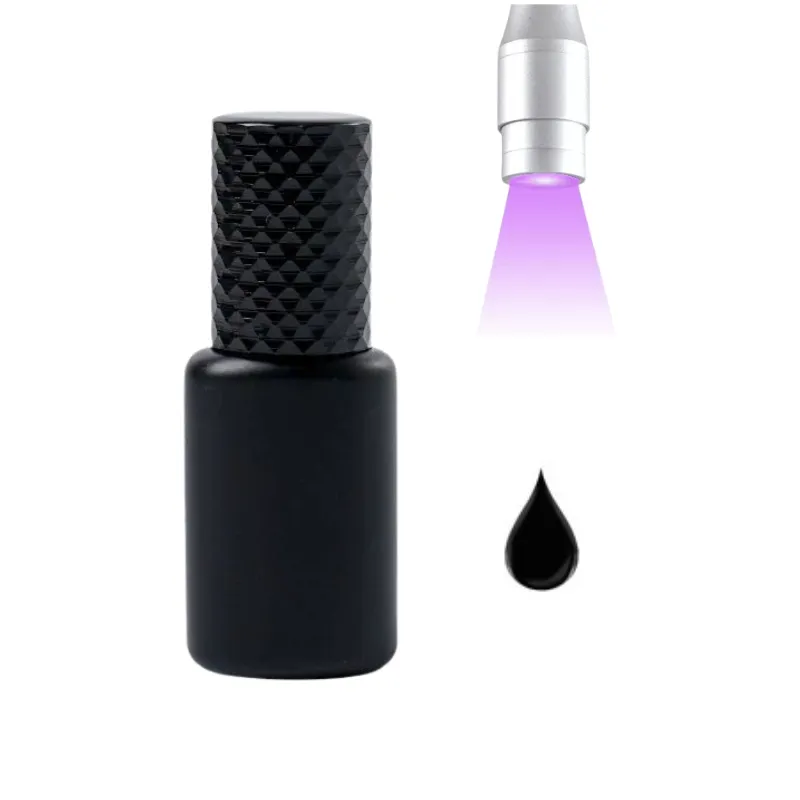
How Lash Glues Factory Tests Formulations Before Production
One 50°C hot melt stability test separates reliable suppliers from the rest.
What a Bulk Buyer’s Sample Request Should Cover
When you request a sample for a private label UV lash glue order, don’t just ask for a bottle and a price. The sample is your only chance to verify whether the formulation will survive container shipping through tropical routes, hold up in a salon’s daily workflow, and meet EU or FDA compliance standards. A serious sample request must specify the viscosity grade (thin flowing vs thick non-drip), the cure speed profile (0.5 second vs 3 second), and whether the target formula is TPO-free or not. Without those specs, the sample tells you nothing about the production run.
Key Documentation to Demand with the Sample
Any supplier that claims TPO-free must back it up with a full INCI list and third-party sensitization patch test data. TPO-free is not a single standard — some manufacturers remove the photoinitiator entirely (UVCA technology) while others substitute with less-studied alternatives like BAPO. Without the INCI list, you cannot verify the difference. Request the Material Safety Data Sheet (MSDS) as well, and cross-check the cyanoacrylate purity standard. Premium private label brands use polymeric flexibilizers instead of phthalate-based plasticizers, which cause brittleness after two to three weeks. A simple retention test on the sample will reveal that difference.
How Lash Glues Factory Handles Sample Requests
When a bulk buyer submits a sample request, the supplier first confirms the target formulation details: viscosity grade, cure speed, and TPO requirement. The supplier then produces a custom sample batch using the exact cyanoacrylate purity and stabilizer package that will be used in the full production run. Each sample is accompanied by the INCI list, MSDS, and the hot melt stability test result (including the 50°C data point). For buyers evaluating multiple suppliers, the supplier recommends running a side-by-side retention test over a full wear cycle — not just a one-day patch test. This exposes differences in flexibilizer quality and long-term bond flexibility.
We also support low MOQ sample orders for distributors who need to validate the formula before committing to a bulk order. The goal is to eliminate guesswork before the first production container leaves the factory.
Conclusion
Skipping formulation verification on a UV lash glue order means accepting the risk that your bulk shipment arrives with separated oil layers, or that your private label brand gets flagged for skin reactions six months in. The cost of inaction shows up in returned stock, lost distributor accounts, and a reputation that takes years to rebuild. A 30-minute spec review today saves you from explaining a 50°C hot melt failure to your best client next quarter.
- Thin-flowing viscosity delivers precision but requires steady hands; thick non-drip suits beginners.
- Cure speed of 0.5s works for pros, 3s for self-application – match it to your artist base.
- TPO-free claims need corroboration via the full INCI list and a sensitization patch test report.
- Hot melt stability testing at 50°C before shipment prevents phase separation during container transit.
Before you commit to a bulk order or finalize your private label spec, request a sample approval batch that includes the factory’s hot melt stability test data and the complete ingredient declaration. Compare those documents against your own quality tolerance thresholds. When you’re ready to evaluate a formulation that aligns with these benchmarks, review the UV lash glue product specifications on the supplier’s page.
Frequently Asked Questions
What does TPO-free mean in UV lash glue?
TPO-free means the glue uses a different photoinitiator instead of trimethylbenzoyl diphenylphosphine oxide, which is linked to skin sensitization and restricted in some EU markets. You must verify the replacement photoinitiator through the. Always request the MSDS to confirm the actual photoinitiator.
How can I get a sample for bulk order?
We offer free samples for bulk buyers—you just pay shipping. Samples are produced from your target formulation spec so you can test viscosity, cure speed, and retention before committing to a production. Request a sample matched to your private label spec first.
Can you customize cure speed and viscosity?
Yes, we adjust both cure speed and viscosity in the formulation to match your target artist skill level and application method. Cure speed ranges from 0.5-second tack-free for pros to 3-second for. Select your cure speed and viscosity before ordering custom production.
Why does some UV lash glue yellow over time?
Yellowing happens when low-quality cyanoacrylate or insufficient stabilizers degrade under UV light exposure. Using high-purity monomers and adding UV stabilizers in the formula prevents this shift, which is why we require batch. Ask for color stability test reports before approving bulk production.
What certifications do you have for UV lash glue?
We hold FDA, ISO 9001, and MSDS documentation, and our TPO-free formulations meet EU cosmetic safety standards. Certifications are available for review during the vetting process, and we can include them with your private. Tell us your target market’s certification requirements early.

One Response