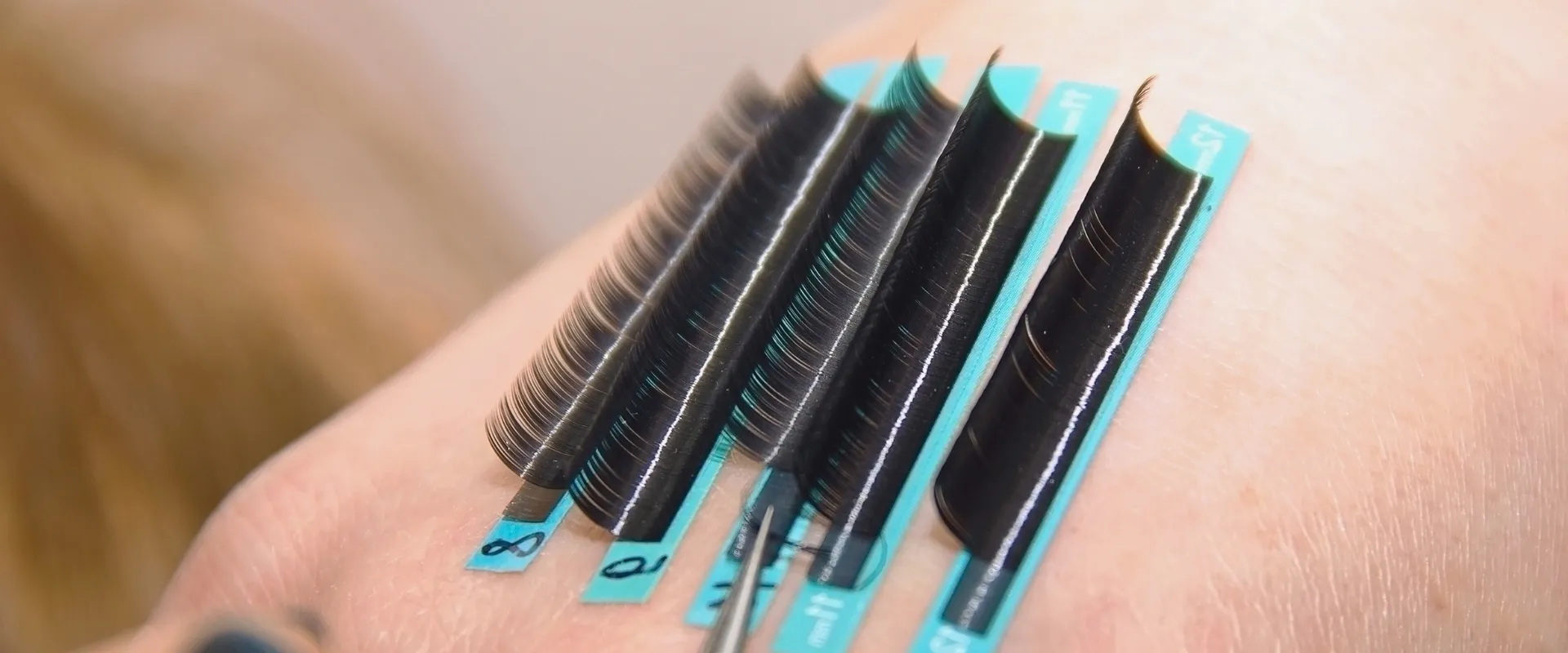


One bottle cannot be both a professional extension adhesive and a consumer strip-lash glue. They bond different materials, cure at different speeds, feel different after cure, and are removed in different ways. A formula built for one job will fail the other in ways a salon notices immediately: a strip glue that sets too fast cannot be repositioned, while an extension glue that stays flexible will let lashes slip. The useful question for a private-label brand is not whether one formula can do both. It is how to run two distinct SKUs through one factory without mixing them up.
Two products, two jobs
Extension adhesive is designed to bond a synthetic lash fiber to one isolated natural lash. The bond has to survive weeks of washing, sleeping, and brushing, so the cured film needs a balance of strength and flexibility. Application is precise: one dip, one placement, and very little room for error. The working time is short, and the glue reacts to moisture in the air. A technician chooses it for control, retention, and a finish that does not look heavy.
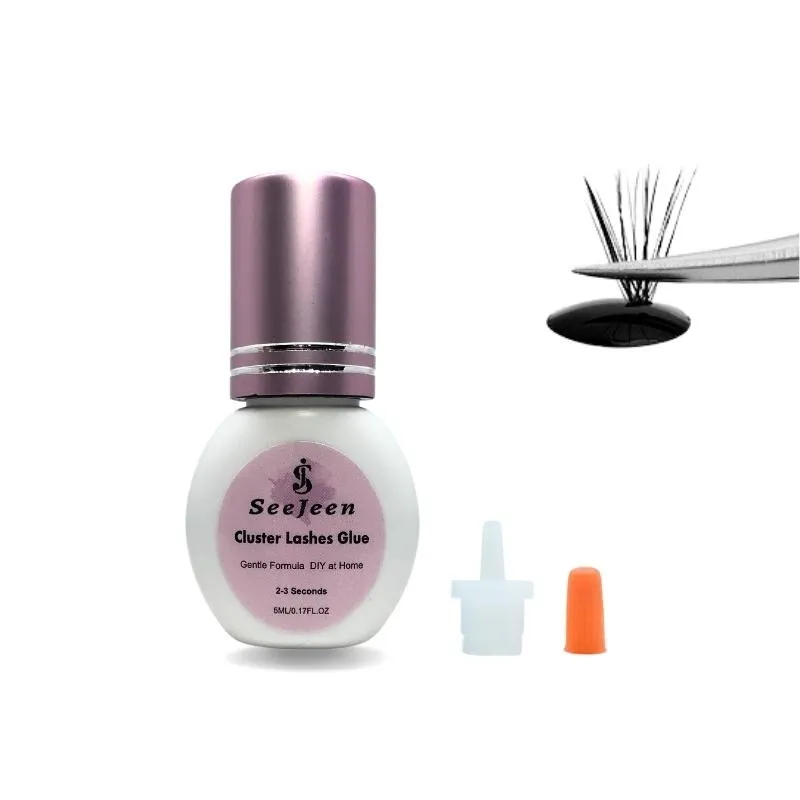
Strip adhesive is designed to hold a lash strip to the eyelid or lash line for a day. The user needs a few seconds to position the strip, adjust the corners, and press it down. The film should stay slightly flexible so it feels comfortable and releases without pulling. The chemistry is often different: latex, acrylate, or water-based systems appear in this category, while extension glue is usually cyanoacrylate-based. Removal is part of the design, not an afterthought.
Those differences show up in the bottle, the nozzle, the label, and the instructions. Extension glue is often sold in small professional sizes with a fine nozzle or brush. Strip glue may be sold in a brush-on tube, a wand, or a kit with applicators. A brand that tries to use one package for both sends the wrong use cues before the customer opens the bottle.
Why a compromise formula fails both
A compromise formula usually starts with good intentions: one base, two markets, simpler inventory. The problem is that the performance window is narrow. Make the glue fast enough for extensions and it can bond strip lashes to skin before the user can adjust them. Make it slow and flexible enough for strip wear and it may not hold an extension through a fill cycle. The result is a product that is acceptable to neither user.
The failure is not only chemical. Claims, warnings, and instructions diverge. Extension glue is a professional product with application risks around the eye. Strip glue is a consumer product used by people who may never have had a lash service. The same label cannot give both audiences the right directions without becoming vague. Vague directions are how a product ends up in the wrong hands.
There is also a testing problem. A factory can test viscosity, appearance, and bench set time for either product, but the meaning of those results changes with the use case. A viscosity that feels right on a strip wand may be too heavy for a fine extension nozzle. A cure speed that suits a volume technician may be unusable for a first-time strip user. One specification cannot carry two intended uses. The article on writing viscosity acceptance criteria shows how to separate the measurable property from the marketing word.

What one supplier, two formulas looks like
“One line” can mean one supplier and two formulas. That is a normal private-label setup. The brand keeps a shared visual identity, while each product has its own formula code, specification, safety data sheet, batch record, and label. The factory runs the formulas as separate jobs, with a changeover between them.
The first control is the formula code. Give each product a code that appears on the purchase order, the batch record, the certificate, the label artwork, and the carton. Do not rely on the product name alone, because names change with marketing. The code is the stable identifier that lets a complaint travel back to the right batch.
The second control is the closure and label. Different cap colors, nozzle types, or label shapes give the warehouse and the salon a visual cue. That cue is not a substitute for a code, but it reduces the chance of a pick error. If both products use the same bottle and the same cap, the only difference is the label, and labels can be applied to the wrong bottle during a busy run.
The third control is the changeover record. Ask the factory how it cleans the filling line between formulas, how it purges the first bottles, and who checks the first-off sample. A written changeover record should show the previous formula, the cleaning step, the new formula, and the approval to start. If the factory cannot describe this sequence, the two SKUs are sharing more than a supplier.

How to prevent mix-ups in your warehouse
Most mix-ups happen after the factory ships, not during production. Two cartons look similar, a picker grabs the wrong one, and a salon receives the wrong formula. The fix is a SKU matrix that anyone can read at a glance.
The matrix should list the product name, formula code, cap color, bottle size, label version, carton code, and the market it is approved for. Print it and post it at the packing bench. When a new label version arrives, update the matrix before the first shipment. A matrix that lives only in a spreadsheet on the owner’s laptop does not prevent a pick error.
Incoming inspection should check more than quantity. Open one unit from each carton and compare the bottle, cap, label, and lot code to the purchase order. Photograph the unit and the carton code. If the factory changed a cap color without notice, you want to catch it before the salon does. If the label on the bottle does not match the label on the carton, quarantine the carton and ask the factory to explain.
Storage separation helps, but it is not enough. Put the two SKUs on different shelves and label the shelves with the formula code. Use pick lists that show the code, not only the product name. For high-volume accounts, require a second person to check the pick before the box is sealed. That extra minute is cheaper than a replacement shipment and a lost salon.
Train the people who answer the phone, too. If a salon calls to reorder “the glue,” the order taker should ask which product and which formula code. A short script prevents the casual substitution that creates a batch of complaints.
What to ask the factory before adding the second SKU
Before you add a strip glue or a second extension formula, ask the factory to walk you through the production plan. The answers will tell you whether the second SKU is a real product or a label variation.
- Will the two formulas run on the same line? If so, what is the cleaning and purge procedure between them?
- Does each formula have its own specification, SDS, batch record, and certificate of analysis?
- Can you supply different closure colors or nozzle types to support visual separation?
- What is the first-off check after a changeover, and who signs it?
- How do you prevent label mix-ups when two brands or two formulas run on the same day?
- Can we review a changeover record and a first-off sample before the first shipment?
- What is the minimum batch for each formula, and how does that affect our launch plan?
- Will you notify us before a formula, raw material, or packaging change?
If the factory answers “we do both, no problem” without describing a changeover, ask for the record. A factory that runs multiple formulas every week should have a routine. A factory that treats the question as unusual may be planning to fill both from the same batch and rely on the label to create the difference. That is the setup that produces a salon complaint six weeks later.
Labeling and claims for each SKU
Each SKU needs its own label logic. The extension product should state professional use where that is the intended market, give clear application and eye-safety directions, and avoid consumer-style claims that imply anyone can apply it at home. The strip product should state consumer use, explain repositioning and removal, and warn about skin contact and eye irritation in language a first-time user can follow.
Claims should match the evidence for that formula, not the other one. A retention claim tested on extensions does not transfer to strip wear. A “sensitive eyes” claim on a strip glue does not describe an extension adhesive. The cosmetic labeling regulations in 21 CFR Part 701 are a useful reminder that claims must be truthful and not misleading, and that a claim affecting the body’s structure or function can change the regulatory category. Keep the claims specific to the product in the bottle.
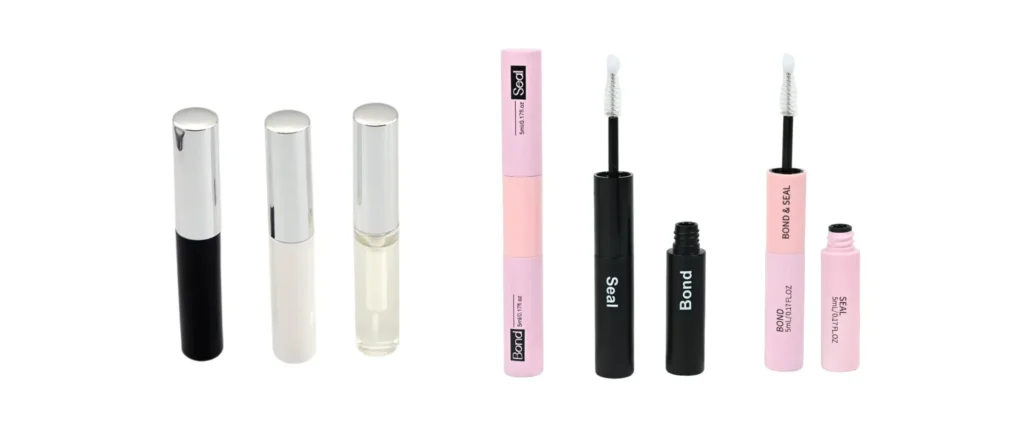
Packaging should reinforce the difference. Different carton colors, different applicator shapes, and different product names help the salon and the warehouse. The article on emballage de colle à cils pour la vente au détail covers the label and pack details that support a clean launch. If you want to understand how cure speed is described without overpromising, the article on lash glue drying time is a useful companion.
A launch sequence for the second SKU
Do not launch both formulas on the same day if you can avoid it. Start with the product you already know, then add the second SKU after the first lot has passed through your own receiving check. When the second formula arrives, inspect it separately, photograph the bottle and carton codes, and keep the two lots apart until the labels are verified.
Give the sales team a one-page comparison: which product is for which client, which applicator to use, and which product name to order. If the two products have similar names, add a descriptor that cannot be confused on the phone. “Pro” and “Pro Plus” are not enough when a salon is reordering in a hurry.
Finally, review the first month of orders. If one SKU keeps arriving at the wrong account, the problem is probably the matrix or the pick list, not the factory. Fix the process before the next production run. A clean launch is less about the formula than about the controls around it.
Build the Second SKU Without Mixing the Two
A private-label brand can serve both markets, but not with one formula. The workable model is one supplier, two formulas, two specifications, and two sets of records. The brand stays unified; the products stay distinct. That separation is what lets a salon trust the extension glue and a consumer trust the strip glue without either one inheriting the other’s risks.
Before the second SKU launches, build the SKU matrix, confirm the changeover record, and check that each carton can be traced to its own batch. If those three things are in place, “one line” is a sourcing strategy. If they are missing, it is a mix-up waiting for a busy packing day.