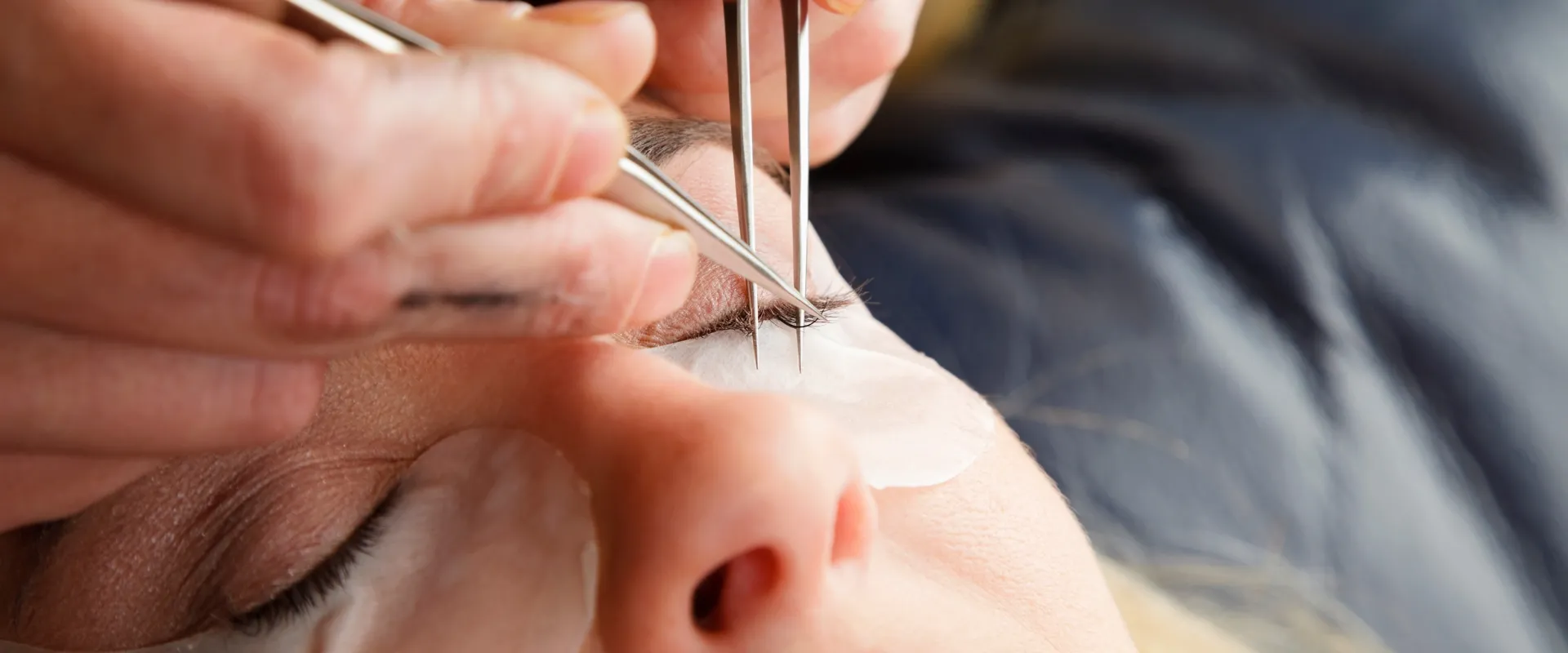


If you are launching a lash brand, the real question behind “OEM or ODM” is simpler than the jargon suggests: how much of the formula do you actually need to control before your first order ships? For most new brands the faster answer is ODM, which means branding a proven formula from the factory’s existing library. OEM, where the formula itself is developed or adjusted for you, earns its extra development cycle once you can name exactly what you want changed and why: a cure speed for your market’s humidity, a fume profile for sensitive clients, a finish a salon chain asked for. This article explains what the two models mean in lash glue, the four buying models you will actually be quoted, and a decision sequence that lets you start selling without betting your launch budget on an unproven custom formula.
What OEM and ODM Actually Mean in Lash Glue
The terms are used loosely across the industry, so anchor them before you sign anything.
ODM (original design manufacturer) means the factory already designed and produces the formula; you choose from the existing line and put your brand on it. Your creative work is packaging, labeling, and positioning. The formula is the factory’s proven design, produced for many brands before yours.
OEM (original equipment manufacturer) means the product is built to your requirement. In lash glue this usually means the factory’s chemists adjust an existing base for your specification, or in full custom development, build a new formula for you. Your brand sits on a product whose behavior was defined by your brief.
One more term to place: white label is essentially ODM with minimal customization, while private label describes the arrangement where the product carries your brand and your artwork. In day-to-day quotes from a lash glue factory, the practical difference between “private label” and “ODM” is often just how much of the packaging and labeling is custom. What changes the cost, timeline, and risk is whether the formula is developed for you or taken from the library.
The Four Buying Models You Will Be Quoted
Almost every lash glue quote collapses into one of four models.
- Wholesale stock. You buy the factory’s product as it ships, under the factory’s brand or unbranded. No artwork, no formula input, the lowest commitment. This is the model to start with when you have not proven demand yet.
- ODM / private label from the library. You pick a formula from the existing range and apply your brand. The formula is proven, the batch process already runs, and your work is artwork plus paperwork. This matches this factory’s description of ODM: private label from the existing formula library, for the quicker path.
- OEM (adjusted formula). The factory adjusts an existing base to your brief: curing behavior, color, viscosity target, packaging format. You get formula influence without a from-scratch development program.
- Full custom development. A new formula designed around your specification, developed in the factory’s lab. Maximum control, maximum development time, and validation work that lands on your timeline.
If you are still building your brand, the reliable sequence runs from wholesale to ODM, and only then to OEM if the market asks for something the library does not carry. Each step adds commitment, and each step should earn the next one with evidence.
When ODM Wins for a New Brand
Speed is the obvious advantage, but it is not the only one.
An ODM formula has a history. It has run through production many times, its batch behavior is known, its storage quirks are documented, and the factory can tell you how it performs across climates before you ask. For a first launch, that institutional knowledge is worth more than a specification sheet: you are inheriting a product with a track record instead of managing a teenager.
The work you do control in ODM is the part your customers actually see and judge: your bottle, your label, your brand story, your education materials for salons. For most lash brands in their first year, that is where the differentiation lives anyway. The formula is your product’s engine; the brand is why anyone buys it. ODM lets you spend your budget on the engine’s reliability rather than its design.
One rule keeps ODM honest: refuse to brand a formula you have not tested yourself. Order samples, run them in real service conditions, and check them against the standard you set for your clients. The formula being “proven” means it has proven it can work; it does not mean it works the way you need on your client’s lashes.
When OEM Starts to Make Sense
OEM becomes the right call when you can complete this sentence: “The library does not have a glue that _____.” The blank is usually concrete, and it is usually one of four things.
- A climate mismatch. Your market works at humidity levels where the standard formulas sit at the edge of their rated window. The fix is a formula developed for your conditions, not a different marketing page.
- A client complaint pattern. Sensitive eyes, fumes, or retention complaints that survive patch testing and technique review point at formula level variables your current product cannot change.
- A professional workflow. Mega-volume artists working at a specific speed need a set time matched to their pace. This factory publishes a cure-speed ladder from beginner formulas at 2–3 seconds down to a professional formula at 0.3 seconds; if your artists sit outside the ladder’s assumptions, a custom target is the honest answer.
- A chain’s requirement. A salon chain may ask for a specific packaging format, color, or labeling configuration. When the request survives your own review and repeats across buyers, it is worth taking to the lab.
This factory develops extension glue formulas in an in-house lab and produces on its own lines, which matters precisely at this moment: you want the people who will adjust your formula to be the people who understand how it was originally designed. When a supplier cannot describe what changes in the formula when you ask for a different cure speed, that is your cue that “OEM” in their vocabulary may just mean “your label”.
The Hidden Work Behind “Custom”
OEM is not a bigger order; it is a project. Plan for three kinds of work before you see a branded bottle.
Validation cycles. A new or adjusted formula needs sample rounds: a lab sample, an application test in real conditions, and usually a second adjusted round before you approve. Each round takes time and each round can send you back to the brief. Budget for two adjustments, not one.
A locked specification. For ODM you inherit a spec; for OEM you own it. That means agreeing to the acceptance criteria that define your formula in production, from viscosity to set behavior, in the documented form a batch can be checked against. Our guide to writing these checks is the viscosity acceptance criteria article: it walks through the exact clause structure a custom formula needs before scale.
Documentation and responsibility. The moment the product carries your brand, quality questions route to you, not the factory. That is true under every model, but OEM concentrates the decisions: what you specified is what you defend. Before development starts, settle who confirms safety documentation and how the quality system behind your formula will be verified. The FDA’s draft guidance on cosmetic good manufacturing practices is a useful read for understanding what a manufacturer’s quality system should include, whichever model you choose.
The MOQ Ladder: 30 Units, Then 100
One of the most useful facts for a new brand is how low the entry actually is. This factory runs wholesale orders from 30 units and private label from 100, which lets you do the thing most launch plans skip: sell before you commit.
Run the sequence like this. Start with wholesale stock at the small end of the range and put it in real salons under your own education and support. Watch what actually sells, what returns, what salons ask for. When a specific formula proves itself, move to a private label run at the entry MOQ, carrying forward exactly the product your customers have been using. The brand changes; the glue in the bottle does not. That is not a compromise, it is a controlled experiment: your customers already voted on the product before you paid for a single printed box.
Two planning notes for the branded run. This factory’s standard OEM production reaches finished, branded product in 10–15 business days once artwork is approved, so the artwork, not the chemistry, is usually the long pole on a from-library launch. And certifications travel with the order: MSDS, SGS and RoHS paperwork ships across the product range by default, which answers the first document request a distributor will send you. If your plan includes OEM from the start rather than wholesale first, the OEM development guide covers how to keep sample-to-production from sliding.
A Decision Sequence You Can Run This Month
- Define the job the glue does in your market: climate, average artist skill, client type. Write it down in one sentence.
- Test the library against that sentence, not against features. Order samples from the range and score them on your own clients.
- If one formula passes, buy wholesale stock at the small MOQ and sell it for a set period.
- If a specific gap emerges, write the gap as a requirement and take it to a private label conversation at the entry MOQ.
- Only when the gap survives a branded run and repeats across customers does full OEM development earn the project budget.
Two more documents make the sequence cheaper to run. An OEM agreement should define formula ownership and what happens if you later switch factories; our OEM contract guide lists the negotiation points that matter. And if your math is still wobbling on commitment size, the MOQ guide spells out how wholesale and private label minimums differ and how to plan a first order around them.
Frequently Asked Questions
Is ODM the same as private label?
In practice, close. ODM describes where the formula comes from, the factory’s design library; private label describes how it ships, under your brand. A private label order from the library is an ODM arrangement. The distinction that changes cost and timeline is formula development versus formula selection, not the label language.
Can I move from ODM to OEM later without losing my customers?
Yes, and it is the standard growth path. Keep the successful formula in production while development runs in parallel, then transition with a controlled comparison batch so you can verify the new formula behaves as promised before it reaches your full channel.
Do I need my own formula to look like a real brand?
No. Lash buyers judge the product by how it performs in the salon and how you support it. A proven library formula with strong branding and honest education outperforms an unproven custom formula with no service history, especially in year one.
What decides whether OEM is worth it?
One test: can you name the specific client-facing problem the library cannot solve? If yes, development has a brief and a business case. If the honest answer is “I want to say custom on the packaging”, the library is the better product and the budget is better spent on the brand.
The Bottom Line
ODM gets a new brand to market on a proven formula and a small MOQ; OEM gets a growing brand the exact product its customers asked for. The mistake is doing them in the wrong order. Prove demand with wholesale, prove fit with a library formula, and let a documented gap, not ambition, write your first development brief. Start by reading the OEM vs private label comparison for how the models price out in effort, then request samples from the existing range and run the decision sequence above on your own clients.