

Lash glue oem manufacturer is the first checkpoint buyers should lock before they approve a supplier, budget, or production slot. The operator at a lash glue factory sees something the buyer never will: the way a batch runs through the filling line. If the cyanoacrylate base hits too hot or the filler ratio changes by even 0.5%, the cure time drifts.
One salon owner I worked with lost a $50,00 order because the pre-production sample held at 1-second dry, but the mass production run came out at 3 seconds. That gap doesn’t show up in a sales call. It shows up when your lash artists start complaining mid-service.
Choosing a lash glue OEM manufacturer isn’t just about comparing prices or scanning a website. It’s about verifying what happens after the sample is approved. Most factories offer a standard formula that works for 80% of lash artists, but custom formulas demand higher MOQs and longer lead times.
The real question is whether the factory can replicate that sample batch consistently across thousands of units. Without a proper OEM lash glue factory vetting process, you’re betting your brand’s reputation on a hand-mixed tester.
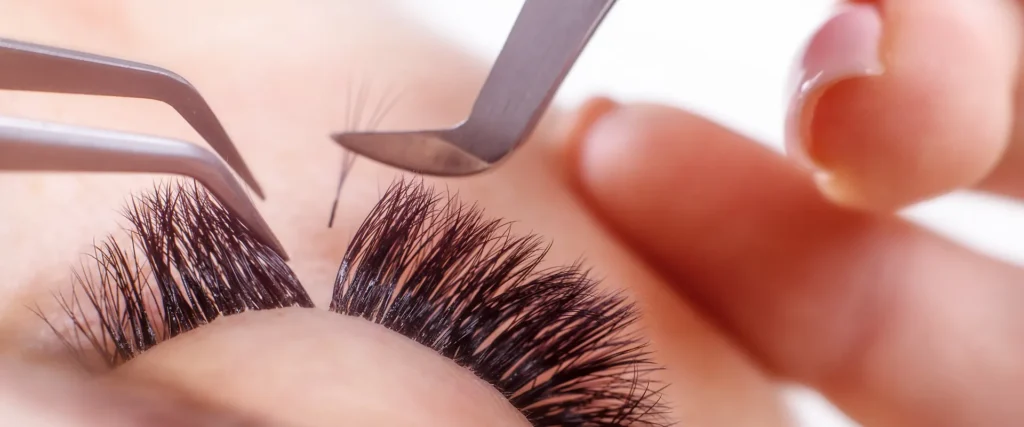
Why Salon Owners Are Launching Private Label Lash Glue
The math is simple: turn a cost center into a 300% margin product line.
Every bottle your lash artists open is a cost center. You pay $4–$8 wholesale per bottle for a standard fast-dry adhesive. That same bottle, rebranded under your salon’s name, can retail for $18–$25 to your clients. The gap is pure margin — no extra labor, no new chair, just a label change.
The 80/20 Formula Rule
Most factories, including ours, stock a standard universal formula that works for 80% of lash artists. That formula costs around $2–$3 per bottle in bulk, with a low MOQ of 200–500 units. You don’t need a custom blend to start. You need consistent quality, proper certification, and packaging that reflects your brand.
Salon owners who skip vetting often grab the cheapest bulk offer — and get substandard cyanoacrylate. That leads to poor retention, irritated clients, and returns. One bad batch can erase a year of trust. The real math includes the cost of a damaged reputation.
What Changes When You Go Private Label
- Bottle cost: Drops from $5 wholesale to ~$2.50 at 500-unit MOQ for a standard fast-dry formula.
- Retail price: Set at $20 – your per-unit profit jumps from $0 (cost) to $16+ after packaging and shipping.
- Client retention: Clients who buy your glue at the salon are more likely to rebook. The product becomes a loyalty anchor.
A salon that goes through 50 bottles a month and sells 30 to clients adds roughly $5,400 in annual net profit from glue alone. That’s before considering cross-sell opportunities like lash shampoo, tweezers, or aftercare kits. The shift from service-only to product line changes your revenue structure without changing your floor plan.
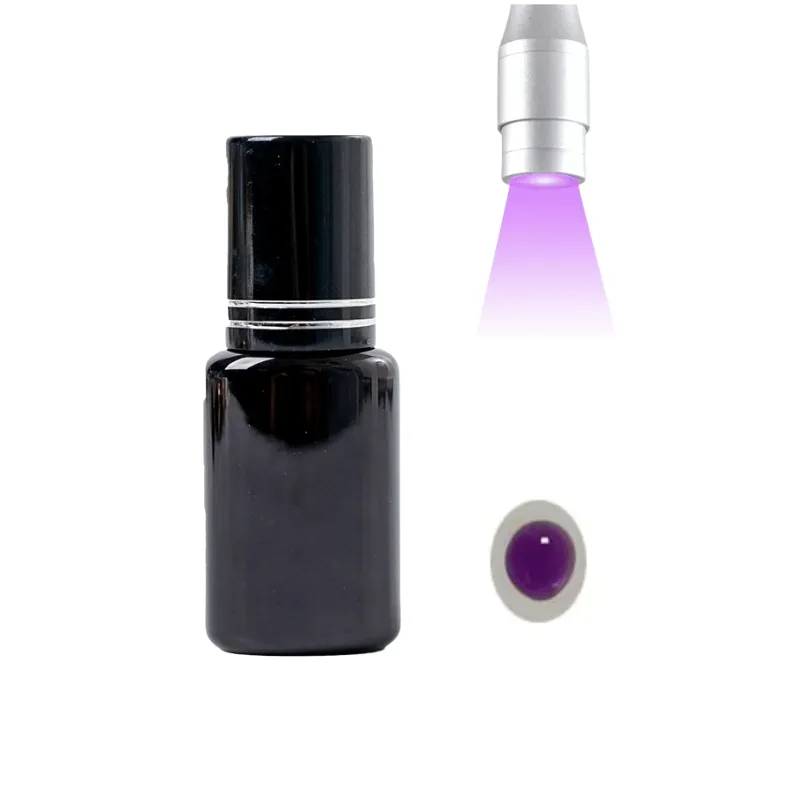
Step 1: Identify Your Lash Glue Formula Needs
Most salon owners pick the wrong formula first — and pay for it in chair time.
If your lash artists work fast — sub-two-minute application cycles — they need a fast-dry formula. These adhesives cure in 0.5 to 1 second, but they emit stronger fumes. For clients with watery eyes or redness during appointments, sensitive formula is the better call. It trades speed (2–3 second cure) for lower irritation. You lose about 1–2 clients per hour on application speed, but you also lose zero clients to chemical reactions.
Clear glue sits in a separate lane. It’s not a speed game. Clear adhesives are designed for volume lash fans and cluster applications where visibility matters. They cure slower — usually 3–5 seconds — and are less durable than black or dark pigmented formulas. If you run a high-volume salon with retention complaints on clear glue, the problem isn’t the artist’s technique; it’s the adhesive’s lower tensile strength.
The 80% rule for standard formulas
Most factories, including Lash Glues Factory, offer a standard formula that works for roughly 80% of lash artists. That’s the middle road: moderate speed, medium retention, low irritation. It suits mixed client bases and newer technicians. Custom formulas — lower fume, faster cure, specific viscosity — require a higher minimum order typically 2–3 times the standard MOQ and a longer lead time. Don’t go custom unless you’ve tested the standard and found a real gap.
Why the cheapest per-unit price is a red flag
Suppliers that quote 20–30% below market average are almost always using substandard cyanoacrylate. That means inconsistent viscosity, faster thickening in the bottle, and more client complaints about burning or poor retention. A salon owner who saves $0.50 per bottle on a 500-unit order loses that ten times over in refunds and lost repeat business. Always ask for the MSDS before sampling — without it, you can’t legally resell the glue in most markets.
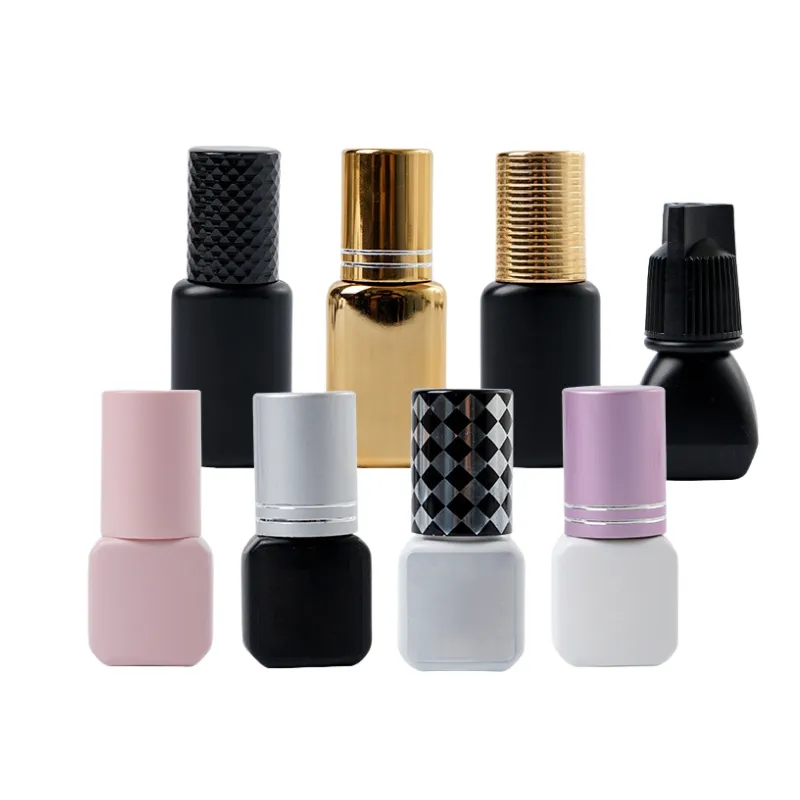
Step 2: Researching OEM Manufacturers
The gap between a factory tour photo and a real production line costs salon owners their entire first order.
Most salon owners searching for a private label lash glue supplier end up talking to a trading company with a rented office and a polished website. The real factory is 300 kilometers away. You pay the middleman’s markup, and if the glue fails retention at week three, the middleman blames the factory and disappears.
How to find factory-direct suppliers (not middlemen)
Start with platforms like Alibaba or Made-in-China, but filter for “Manufacturer” not “Trading Company.” Look for a business license that lists the actual production address. Cross-reference that address on Google Maps or Baidu Street View. A real lash glue manufacturing facility has chemical storage tanks, mixing vats, and filling lines. A trading company sits in a commercial building with conference tables.
Ask for a live video call inside the production floor. Not the lobby. Not the showroom. The floor. If the supplier hesitates or offers pre-recorded footage, you are not speaking to the factory. Request an “OEM lash glue factory vetting” document that includes the number of production lines and monthly output capacity. A genuine manufacturer quotes those numbers instantly.
Red flags: fake factory photos, no MSDS, no factory audit
Reverse-image search every factory photo the supplier sends. Stock photos and images reused from other factories appear immediately. A legitimate lash glue manufacturer has unique production floor images with consistent lighting, equipment, and staff uniforms. Duplicate photos across multiple supplier pages mean you are looking at a middleman.
No Material Safety Data Sheet (MSDS) is an instant dealbreaker. Without it, you cannot legally sell that adhesive in most countries. The supplier should provide an MSDS before sample shipment. If they ask why you need it, walk away. A factory that understands export compliance sends the MSDS as part of the standard sample package.
A factory audit does not require flying to China. A third-party inspection service like SGS or QIMA can audit the facility for under $400. The report covers equipment condition, raw material storage, filling station cleanliness, and quality control documentation. If the supplier refuses a third-party audit, they have something to hide.
- Key Red Flag: Supplier claims “lash glue manufacturer certification ISO” but cannot name the certifying body.
- Real Check: A legitimate facility holds ISO 13485 or ISO 9001 with a verifiable certificate number. Request the certificate and verify it online.
- Sample Trap: The sample arrives in branded packaging but the bulk order comes in unbranded bottles with different nozzle designs.
- Cost Risk: Fake factories often quote unrealistically low “custom lash glue packaging cost” because they have no intention of delivering quality.
Step 3: The Vetting Process
Without an MSDS, you cannot legally sell lash glue in most markets.
Start by requesting three documents from every candidate: the Material Safety Data Sheet (MSDS), third-party certification (ISO or SGS), and a list of client references. The MSDS lists hazardous ingredients, handling precautions, and first-aid measures — regulators in the EU, US, and Australia require it at point of sale. A supplier who hesitates or sends an incomplete MSDS is a red flag.
Certifications vs. reality
ISO 9001 indicates a quality management system is in place. SGS testing confirms lot-specific composition. Neither guarantees your clients won’t react. Ask what grade of cyanoacrylate the factory uses. Cheap suppliers substitute lower-purity monomer to cut costs, and that scrapes up irritation rates. A factory that leads with its raw material sourcing and batch-level traceability is telling you they’ve been audited before.
Sample testing protocol
Never skip the sample stage. Run a three-part test on every sample: retention (does it last 3–5 weeks across different lash artists?), cure time (does it dry within 1–2 seconds as advertised?), and irritation (apply to 5 volunteers with known sensitivities). Document results. A single batch that passes doesn’t prove consistency — ask the factory for three production lots from different months.
Most factories offer a standard formula that covers 80% of lash artists. Custom formulas require 2–3× the minimum order quantity and longer lead times. If your brand targets sensitive eyes, start with the standard sensitive formula, verify it via sample testing, then scale. Don’t commit to a custom formulation before you’ve confirmed the baseline works in your team’s hands.
Client references matter more than glossy brochures. Ask for contact details of three salon owners who ordered the same formula you’re evaluating. Call them. Ask about batch consistency, delivery timelines, and how disputes were handled. A factory that has been reliable for others will likely be reliable for you.
Step 4: Comparing MOQs and Pricing
MOQ isn’t just a number—it determines your entry cost and formula flexibility.
Most manufacturers offer a standard formula that works well for about 80% of lash artists. If that formula fits your salon’s needs, the minimum order quantity might be as low as 500–1,000 units. The moment you request a custom formula—different cure time, adjusted viscosity for sensitive eyes, or a milder fume profile—the MOQ jumps to 2,000–3,000 units minimum.

Small-Batch vs. Volume Pricing
A small-batch order (500–1,000 bottles) typically costs $2.50–$4.00 per bottle, depending on bottle size and cap style. At 3,000+ units, that per-unit price often drops below $1.80. The trade-off: lower upfront investment versus higher margin per bottle. For a salon owner testing a new brand, starting with a small batch from a low MOQ lash glue supplier makes sense—but only if you lock in a reorder price before signing.
| Factor | Standard Formula | Custom Formula | Key Consideration |
|---|---|---|---|
| Minimum Order Quantity | 500–1,000 units (low MOQ available) | 2,000–3,000 units (2–3× higher MOQ) | Standard formulas cover ~80% of lash artists; custom requires larger commitment |
| Per-Unit Price (500 units) | $2.50–$4.00 per bottle | $4.50–$7.00 per bottle | Custom formulations use specialized cyanoacrylate blends |
| Per-Unit Price (5,000 units) | $1.20–$2.00 per bottle | $2.80–$4.50 per bottle | Bulk pricing only available for standard formulas without custom additives |
| Custom Packaging Mold Fee | $0 (use factory stock packaging) | $800–$2,500 one-time mold cost | Hidden cost often overlooked; includes labeling fees if custom logo required |
| Lead Time (from order to shipment) | 15–20 business days | 30–45 business days | Custom formulas require stability testing and MSDS updates |
| Certifications Included | FDA, CE, MSDS (standard batch certificates) | Same certifications + optional SGS testing at extra cost | Always request MSDS before sampling; without it you cannot sell in many countries |
The Hidden Costs That Eat Your Margin
Custom packaging isn’t included in the glue price. A standard black bottle with a foil seal might add $0.12 per unit. A branded bottle with your logo embossed on the cap? That requires a mold—typically $200–$500 one-time fee. Custom labels, if printed on the bottle rather than a sticker, add another $100–$300 in plate fees. Then there’s the outer carton: full-color print runs start around $400 for the first 500 boxes.
- Mold fees: Custom bottle or cap molds run $200–$500. This is a one-time cost, so spread it over your first order volume.
- Silkscreen plates for direct-print bottles add $100–$300 per color. Sticker labels are cheaper but can peel in humid salon conditions.
- Full-color outer boxes with your brand name cost around $400 for the first 500 units. Plain kraft boxes are free or minimal.
Why Cheap Glue Is Never Cheap
The lowest per-unit price often comes from factories using substandard cyanoacrylate. That glue might cure slower, produce more fumes, or fail retention tests after two weeks. A $0.50 discount per bottle disappears when you refund 10 clients and lose repeat bookings. Always ask for the cyanoacrylate purity spec—anything below 99% is a red flag.
One more hidden cost: missing certifications. If you don’t request the MSDS and FDA registration upfront, you may need to pay extra for document preparation or lab testing later. Some factories charge $150–$300 to issue a notarized MSDS for your brand. Factor that into your comparison.

Step 5: Making the First Order
A signed agreement locks in quality and price before production starts.
The first order is where the paperwork meets the production floor. A salon owner who skips negotiating terms often ends up with a batch of glue that cures too fast for her artists or packaging that arrives misprinted. Two things matter most here: how you pay and what the contract says about quality control.
Negotiating Payment Terms and Lead Times
Most factories request a 30% deposit via T/T bank transfer with the remaining 70% due before shipment. That is standard in this industry. But for a first order from a new private label lash glue supplier , push for a 50/50 split — 50% upfront, 50% after inspection of the finished batch. A factory that hesitates on post-inspection payment likely has something to hide. Lead times typically fall between 15 and 25 working days for standard formulas. Custom formulations or special packaging can stretch that to 35 days. Get the delivery window written into the agreement with a penalty clause for delays beyond 10 days. Without that clause, a two-week slip becomes a four-week slip and your salon launch date gets burned.
What to Include in Your OEM Agreement
The lash glue OEM agreement checklist should start with a quality clause that names specific performance metrics — cure time tolerance ±1 second, retention hold verified at 4+ weeks under standard wear, and viscosity range in centipoise. Vague language like “good quality” is worthless when a batch fails. Your contract must also define the acceptance threshold for sample approval versus mass production. A common trap: the pre-production sample passes, but the bulk run uses cheaper cyanoacrylate and the glue yellow within two weeks.
Reorder terms are the second critical piece. Lock in the unit price for at least 12 months or the first three reorders — whichever comes first. Many factories raise prices 10–15% on the second order if no reorder clause exists. Also specify the reorder MOQ. Your first run might be 500 units, but if the reorder MOQ jumps to 2,000 without warning, you are stuck with excess inventory. A reliable supplier keeps reorder MOQs consistent or offers a clear step‑up schedule.
A salon brand that skips these terms pays for it later — either through inconsistent glue performance or surprise cost increases. One missed clause can eat an entire quarter of margin.
Final Checklist: 10 Questions to Ask Before Signing
Skip these questions and you’re signing a blank check.
You’ve compared MOQs, reviewed packaging samples, and negotiated pricing. The contract is ready. But one missed detail can turn a profitable launch into a compliance nightmare. Salon owners who skip the final vetting stage often discover that the cheap per-unit price came from substandard cyanoacrylate, or that the custom formula they ordered never matched the sample. Here are the ten questions that separate a reliable partner from a costly mistake.
Compliance and Formula Integrity
- Can you provide the MSDS before sampling?: Without a Material Safety Data Sheet, you cannot legally sell the glue in most countries. Ask for it upfront — if a supplier hesitates, they likely don’t have one.
- What cyanoacrylate grade do you use?: Cheap suppliers substitute low-grade monomers that cause irritation and poor retention. Reputable factories specify medical-grade or high-purity cyanoacrylate.
- Which third-party certifications do you hold?: ISO 9001, FDA registration, and SGS reports are the baseline. Ask to see current certificates — not a screenshot from three years ago.
- What is the true MOQ — and can I start lower?: Many factories advertise a low MOQ for stock formulas, but custom bottles or private label boxes can push the minimum to 1,000+ units. Get the number in writing.
- What are the hidden costs?: Mold fees for custom dropper bottles, label artwork charges, and separate MSDS translation fees all add up. Ask for a full cost breakdown before signing.
- How long does custom packaging take?: Standard lead time for private label lash glue with custom packaging is 25–35 business days. If they promise 10 days, something is being rushed.
- What happens if the batch fails QC?: Your contract should include a quality clause: acceptable retention rate, cure time tolerance (±0.5 seconds), and a clear replacement policy for defective lots.
- Can I lock in pricing for reorders?: Cyanoacrylate prices fluctuate. A six-month price lock protects your margin. If the supplier refuses, plan for 5–10% cost increases on repeat orders.
- Who owns the formula if I develop a custom blend?: Some OEMs retain the rights to your custom formula. Make sure the agreement gives you exclusivity or a clear path to switch manufacturers later.
Pricing, Packaging, and Lead Times
Agreement and Reorder Terms
A factory that answers these ten questions with transparency and supporting documents is a factory worth signing with. One that dodges, deflects, or offers verbal promises only — walk away. Your brand reputation rests on the glue that holds your clients’ lashes.
Conclusion
Choosing a lash glue OEM manufacturer is not just about comparing unit prices. The factory that offers the lowest per-bottle cost often cuts corners on cyanoacrylate purity, which leads to client irritation and refund requests. Without an MSDS and certifications like ISO or SGS, you cannot legally sell the product in many markets. Your best move is to request samples for a full retention and cure time test, then run a sample approval protocol covering cure time, retention, and irritation response before committing to a production run.
- Request an MSDS before sampling – a legal requirement for sale in most countries.
- Standard formulas work for 80% of artists; custom formulas raise MOQ 2-3x.
- Substandard cyanoacrylate in low-cost glue causes client complaints.
- Run a sample approval test checking retention, cure time, and irritation.
Once you have a shortlist of approved factories, compare their OEM agreement clauses — especially quality tolerance and reorder terms. For a concrete example of how consistent quality is documented and maintained across production runs, browse the specifications on the product page. That level of detail is what you should expect
Frequently Asked Questions
What should I look for in a lash glue OEM manufacturer?
You need a factory that offers full OEM support—custom formula, packaging, and labeling—and can provide MSDS, ISO or SGS certification, and client references. Watch for red flags like fake factory photos or. Start your search with a factory audit and sample test.
How do I verify a lash glue factory’s certifications?
Ask for copies of ISO 22716, FDA registration, or SGS test reports, and cross-check them with the issuing body or request a third-party audit. Genuine factories will share lab reports and batch records without. Only proceed after confirming a valid certification trail.
What is the typical MOQ for private label lash glue?
Stock formula private label runs often start around 500–1,000 units per SKU, while custom formula production usually requires 2,000–5,000 units to cover mold fees and material setup. Some factories offer lower trial MOQs. Negotiate MOQ only after locking your formula and design.
How can I test lash glue samples before committing?
Request 5–10 sample bottles of each formula you’re considering, then run a retention test, cure time check, and irritation patch on your own artists. Compare results against your current standard glue over a. Don’t scale until your test group gives consistent feedback.
One Response