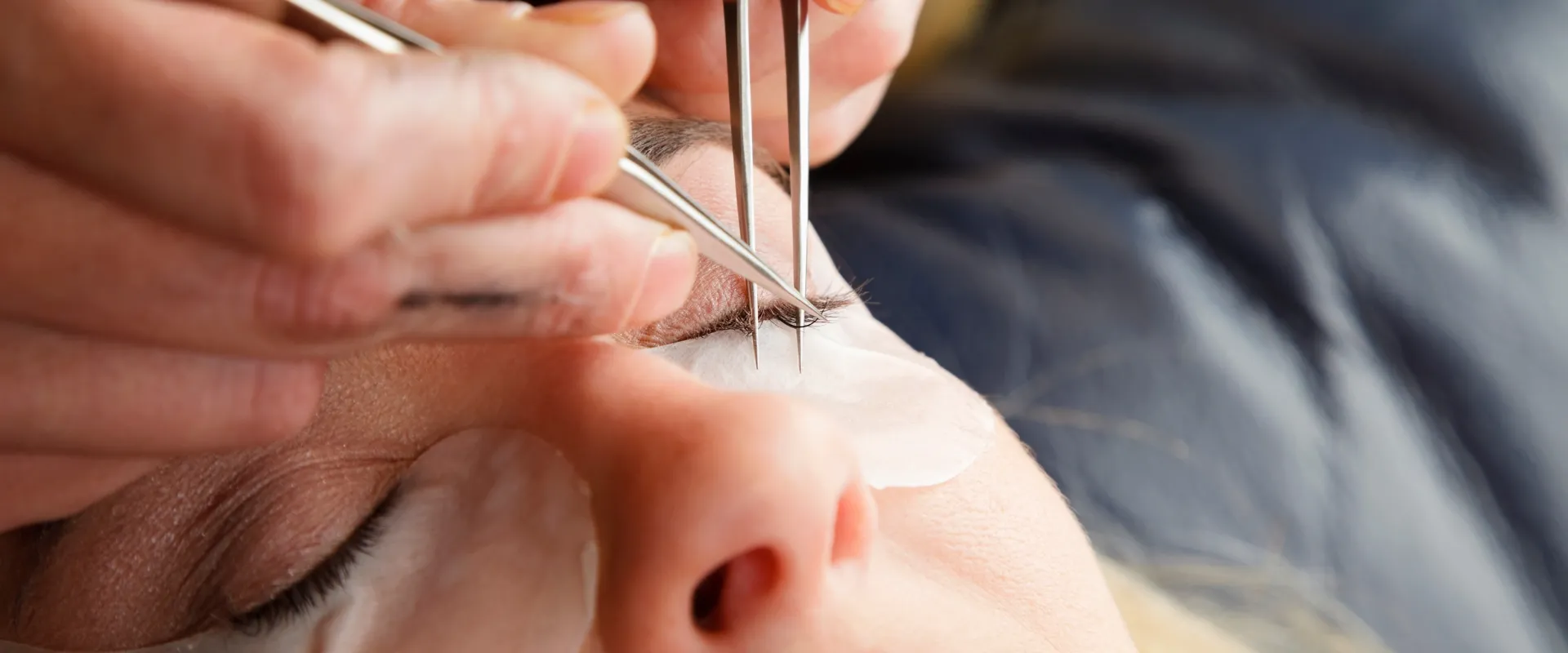


Lash factory quality red flags is the first checkpoint buyers should lock before they approve a supplier, budget, or production slot. Day 1, you place the order. Day 14, a pre-production sample arrives. Looks perfect. Day 45, the container lands at your warehouse. Day 47, you open the first box and spot it — the curl is off, the band has a visible crimp mark, and the glue tack feels different from the sample.
That $50K order just turned into a return headache. The problem started not with the factory’s production line, but with what you missed during the sourcing phase. Most lash factory quality red flags show up long before mass production begins — you just need to know where to look.
Missing batch numbers, a factory tour that skips the QC lab, or a supplier that can’t hand you a written tolerance sheet are not minor oversights. They signal a systemic gap in process control.
For a lash artist or distributor placing a bulk order, that gap means inconsistent product — lashes that don’t fan the same way, bands that fray, or glue that cures unpredictably. The fix is not more samples. It’s a sharper filter. Here are five red flags that separate a factory with repeatable quality from one that ships surprises.
Red Flag #1: No Batch Number or Traceability on Packaging
A missing batch number turns a return request into a he-said-she-said dispute.
When a lash glue bottle arrives without a batch number or lot code, you lose the ability to link that unit to its production run. If clients report irritation, separation, or curing failure three months later, the supplier can claim the issue comes from a different batch — and you have no way to prove otherwise.
How batch traceability protects your liability
A professional manufacturer like Lash Glues Factory assigns a unique lot code to every production batch. That code ties to specific raw material receipts, mixing records, curing conditions, and QC test results. Without it, a customer complaint about adhesive strength becomes a blind investigation. You absorb the cost of replacements or refunds because the factory can deny responsibility.
- Batch code standard: ISO 22716 (GMP for cosmetics) requires each production lot to have a unique identifier. If your supplier skips this, they are not operating to regulated cosmetic manufacturing standards.
- Failure scenario: A 200-unit order of fast-drying glue arrives with no lot stamp. After two months, 15 bottles show thickening. Without a batch number, the factory says it’s a storage issue on your end. You eat the loss.
What to ask before ordering
Request a sample of their current production packaging. If the bottle, carton, or label has no space for a lot code or expiry date, that is a red flag in itself. Then ask for their batch record procedure — how they log raw material lots and assign numbers. A factory that cannot show this will not be accountable for defects. This is one of the easiest checks when learning how to spot a bad lash manufacturer.
Red Flag #2: Factory Tour Refuses to Show QC Lab or Testing Equipment
A factory that hides its QC lab is hiding its quality problems — full stop.
A factory tour that conveniently “runs out of time” before reaching the QC lab is one of the most telling red flags in lash factory audits. You don’t need to see the packaging line. You need to see where they verify what they produce. For lash glue manufacturers, the QC lab should contain calibrated instruments for viscosity measurement, pH testing, cure-speed monitoring, and tensile strength checks on lash bond samples. If the lab is locked, off-limits, or doesn’t exist, the factory isn’t measuring consistency between batches.
What a Real QC Lab Looks Like
A functional lash adhesive factory keeps a temperature- and humidity-controlled room dedicated to batch verification. Trained technicians run viscosity checks before filling, adhesion tests on standard lash strips, and stability trials under accelerated aging conditions. Professional facilities maintain a sample archive from each production lot for traceability. When a factory refuses to show you these areas, it means they are not tracking the variables that determine whether your private label order meets your spec — or fails on the first 50 units.
The AQL Test That Separates Real Factories From Pretenders
What Happens When QC Is Missing
You receive a bulk order where the glue viscosity varies from bottle to bottle. Some cure in 2 seconds, others take 8. Some feel runny, others are thick. You get returns from lash artists who claim the glue burns or doesn’t hold. Without batch-level QC logs, you have no way to pinpoint whether raw material inconsistency, humidity shift, or filling machine variation caused the issue. A factory tour that refuses to show you the QC lab isn’t just hiding equipment — it’s hiding your future liability.

Red Flag #3: Humidity/Temperature Not Logged in Production Area
Cyanoacrylate glue cures by humidity — a dry production line means inconsistent hold across your order.
Why a Missing Humidity Log Kills Consistency in Lash Production
You open a 500‑bottle order from a new supplier. Bottles from the middle of the batch cure at four seconds. Bottles from the edge take eight seconds. Same formula. Different air. That’s what happens when the production floor has no logged humidity data.
Lash glue is cyanoacrylate‑based. The curing reaction requires water vapor in the air to polymerize. If a factory’s relative humidity swings from 30% to 70% across a shift, the cure time on your bulk eyelash glue for salons will vary bottle by bottle. That’s not a batch defect — it’s a process failure. Lash bands are equally sensitive. Nylon and PBT fibers absorb moisture, which changes their curl memory and bond strength with the adhesive. An uncontrolled environment guarantees that your first 100 units differ from the last 100.
Professional factories log temperature and humidity at least every two hours in the filling and band‑assembly areas. The log should show a stable range, typically 45–55% RH and 20–25°C. At Lash Glues Factory, every production zone has a calibrated hygrometer and thermometer, and the logs are available for client review. We maintain that range because it’s the only way to guarantee that our fast drying eyelash glue wholesale cures within the advertised window order after order.
Red Flag #4: Sample Lashes Have Visible Crimp Marks or Uneven Curls
One crooked lash in the sample pack means the entire batch is suspect.
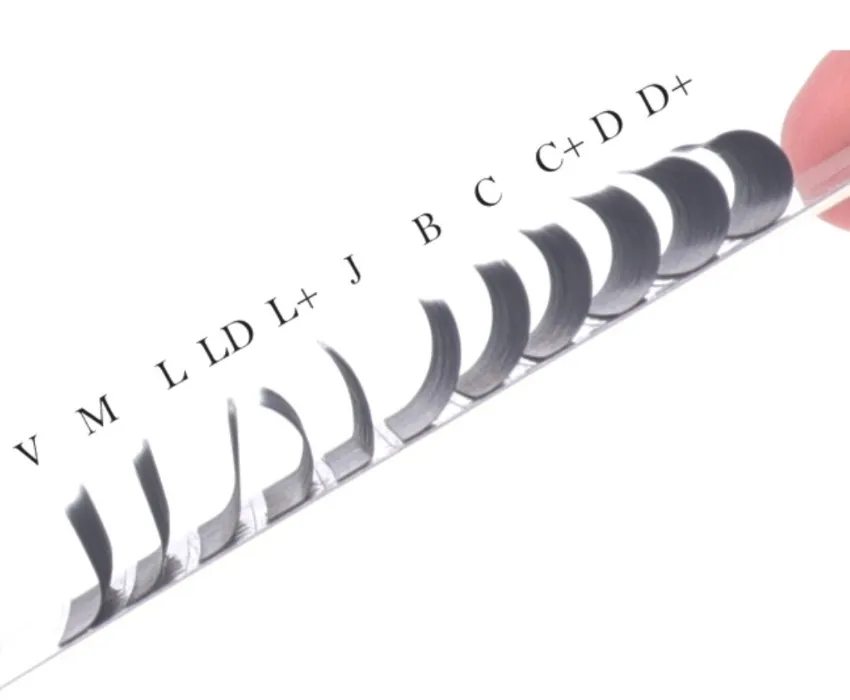
An uneven curl or visible crimp mark on a single sample fan is never a one-off accident. It signals a breakdown in the production line’s repeatability — the machine tension settings, band curing temperature, or operator technique is inconsistent. In lash adhesive manufacturing, even the humidity log matters: cyanoacrylate glue cures based on ambient moisture. A factory that doesn’t record that data will produce fans where curl angles vary by 10 degrees or more across a single tray.
Why One Bad Sample Proves a Process Failure
Reputable factories run first-article inspection on every mold or machine setup. A sample with visible defects means that inspection either didn’t happen or was performed with tolerance limits too wide to catch a 5-degree curl deviation. The real issue isn’t the single lash — it’s the absence of a defined acceptable quality limit (AQL). Professional suppliers like Lash Glues Factory share their AQL sampling plans and QC checklists openly, so you know exactly what’s acceptable before production starts.
- Inspect sample consistency: Request 10 identical fans from the same production run. If curl angle varies more than ±3° or crimp marks appear on any one, reject the batch and demand root-cause documentation.
- Verify band tension control: Ask for the lash band tension measurement during manufacturing. Uncontrolled tension leads to uneven curl — and the same tension flaw affects the entire bulk order.
- Audit the first-article record: A professional factory should provide a signed first-article approval form for your spec. No record means no process control.
Red Flag #5: Supplier Cannot Provide a Written QC Checklist or Tolerance Sheet
A written QC checklist is the difference between a shipment you can sell and a shipment you can’t.
When a supplier hesitates or flat-out refuses to share awritten QC checklistand tolerance sheet, you’re looking at a factory that operates on vibes, not standards. A professional facility has its acceptance criteria documented and ready to hand over. You ask for it, they send it. No pushback, no “they’ll get back to you.”
What a proper QC checklist must include
A real checklist covers every measurable attribute: curl angle (e.g., J-curve 40° ±2°, C-curve 55° ±2°), band width, fan consistency for volume lashes, and adhesive droplet size if pre-glued. It also specifies batch-level tests like adhesion cure time and humidity tolerance. Without these numbers, you have no legal or commercial grounds to reject a bad run.
The “100% inspection” trap
Many factories claim they do “100% inspection.” Ask for their AQL (Acceptable Quality Level) sampling plan instead. A factory that only checks the first 10 and last 10 pieces of a 5,000-unit run is not doing inspection at all — it’s spot-checking. A proper AQL table (e.g., AQL 2.5 for critical defects) tells you exactly how many units they pull per lot and how many failures trigger a full re-inspection.
The tolerance sheet tells you what they will fight over
A tolerance sheet defines the maximum allowable deviation before the batch is rejected. For lash extensions, acceptable curl variation is often ±2°, glue placement tolerance is ±0.2mm, and band thickness tolerance is ±0.01mm. If a supplier has no written tolerances, they will accept whatever the machine spits out and blame the shipping environment when you complain.
How to catch this red flag before ordering
During the supplier vetting process, send this exact request: “Please share your QC checklist and tolerance sheet for the buyer’s reference. These criteria will be included in the contract.” A factory that complies within 24 hours is
What To Do If You See These Red Flags: Ask for CoA & Request Third-Party Testing
A missing CoA is the clearest signal to walk away from a supplier.
When you spot red flags — no batch numbers, no humidity logs, a locked QC lab — your next move is simple: ask for the Certificate of Analysis. A proper CoA from a lash glue manufacturer should list viscosity, cure time, shelf life, and the batch number that ties back to production. If the supplier hesitates or sends a generic one-page document with no batch reference, you’ve just confirmed the problem.
What a Real CoA Looks Like
A legitimate CoA includes the specific batch ID, test date, and measurable values for each quality parameter. For cyanoacrylate-based adhesives, the critical numbers are viscosity range (measured in cP), fixture time, and full cure time. If the document only says “pass” without listing actual numbers, it’s not a CoA — it’s a piece of paper.
Cross-check the batch number on the CoA against the batch number printed on your sample bottles. Mismatched numbers are the easiest way to spot a fake. A factory that maintains batch traceability across production runs can provide this in under five minutes.
When to Push for Third-Party Testing
If the supplier provides a CoA but the red flags from earlier steps still nag at you — say, the QC tour was refused or the humidity log was missing — request third-party lab testing. This is not a trust exercise. It’s a verification step. Ship samples directly to an independent lab like SGS or Intertek and ask for a full adhesive analysis.
The cost of a single third-party test is roughly $200 to $400 depending on the scope. Compare that to writing off a 10,000-unit bulk order because the glue cured too fast or failed during application. The math favors the test every time.
Don’t Forget the AQL Check
Many factories claim 100% inspection. In reality, they check the first 10 units and the last 10 units off the line. That’s not 100% inspection. Ask the supplier for their Acceptable Quality Level (AQL) sampling plan. A standard AQL of 2.5 means they accept up to 2.5 defects per hundred units. If they can’t explain their sampling plan, they don’t have one.
A professional factory, like the kind that partners with Lash Glues Factory on standardized QC workflows, will share this information without a second thought. If you get pushback, you already know the answer.
Conclusion
These five red flags—missing batch codes, hidden QC labs, unlogged humidity, flawed samples, and missing tolerance sheets—tell you exactly which factories to walk away from. But spotting them is only the first move. The detail that separates professionals from amateurs: request a Certificate of Analysis and commission independent third-party testing before committing to a bulk order.
-
- No batch number means zero accountability for returns.
- A factory that refuses to show its QC lab isn’t measuring quality.
- Unlogged humidity ruins cyanoacrylate curing consistency.
- Demand a CoA and third-party test results before your first bulk order.
Now that you can identify these warning signs, the next step is to verify a supplier’s quality control documentation. Ask for their AQL sampling plan and written tolerance sheets. When evaluating a partner like Lash Glues Factory, review their manufacturing processes and testing protocols on their manufacturer page. A factory that shares batch traceability data and QC lab footage is one you can trust with your next bulk order.
Frequently Asked Questions
Why is batch traceability critical on lash glue packaging?
Without a batch number on the label, you cannot trace a defective shipment back to the production run, so the factory can deny responsibility. A traceable lot code is the only. Always ask for batch numbers on every unit before approving packaging.
How can I verify a lash factory has a real QC lab?
Ask for a live video walkthrough of the QC lab during your factory tour — if they refuse or redirect you, assume they have no measuring equipment. A serious supplier will show. Request a real-time video tour before placing your first order.
What should I check in a lash sample to spot quality problems?
Inspect the curl for consistency and examine the band for crimp marks or uneven thickness — even one bad sample signals a systemic process failure. Hold the sample next. Never approve a sample without measuring its physical specs against your tolerance sheet.
What humidity and temperature records should a lash glue factory keep?
They must log temperature and relative humidity hourly in the production area, because cyanoacrylate glue cures by humidity — inconsistent levels cause unpredictable hold times. Ask for the past 30 days of. Request production-zone environmental logs before scheduling your first bulk run.
What QC documents must a professional lash supplier provide?
A written QC checklist and tolerance sheet — a professional factory will happily share their acceptance criteria for curl angle, band width, glue viscosity, and cure time. If they cannot produce a. Insist on a signed QC checklist before approving pre-production samples.