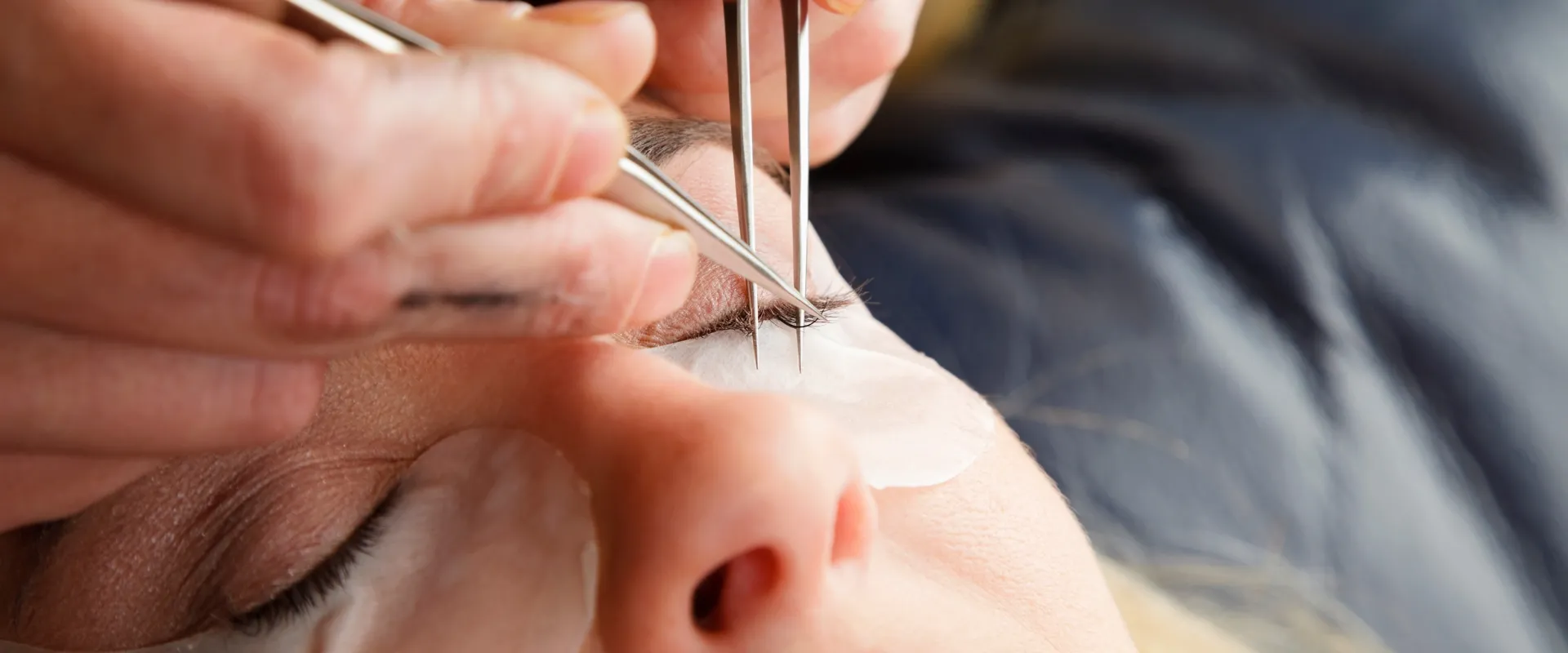


A flat lash curl comparison that ticks every box — curl degree, length pairing, adhesive dry time, even FOB pricing from three factories — can still miss the one factor that triggers most post-delivery complaints: whether the pre-production sample matches the mass production run. A $50K lash order falls apart when the C curl on the approval card shows a 45° lift, but the production cartons land at a 38° angle that folds back into the crease on hooded eyes. That mismatch has nothing to do with the artist’s technique. It is a measurement failure that starts long before the glue ever opens.
Flat lashes complicate the comparison because the curl angle exists in two dimensions: the rise at the base and the arc at the tip. That is why the CC curl is not simply a midpoint between C and D. In flat lashes, CC carries a more pronounced base angle with a softer tip, which creates a natural cat-eye effect on almond eyes. If you are weighing C vs CC vs D for different eye shapes, the real test is whether the factory’s sample approval sheet matches the curl angle on the actual production line. A quality tolerance that sounds acceptable on paper can shift the entire look of the set once the lashes hit the tray.
Do nothing with this comparison and the cost shows up in the first fill cycle: clients return a week earlier than the usual three-week cycle, and the tray you stocked for a full month barely covers three weeks. The fix is not a slower-setting glue or a different length. It is measuring the flat lash curl angle before you commit to a production order.
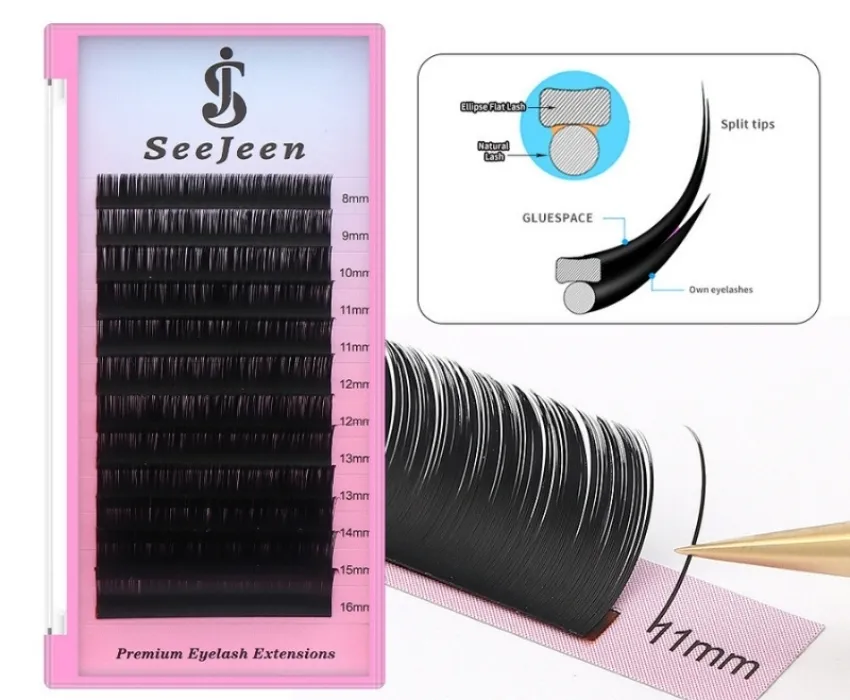
Understanding Curl Angles in Flat Lashes
CC is not a midpoint between C and D.
Flat lash curl angles are measured at the bend point, not the tip. That’s why a CC tray can look less curled than a C tray even though its angle reads higher — the base sits sharper, but the tip returns to a softer line.
C curl (45–50°): natural lift for almond eyes
C curl follows the natural sweep of almond eyes. It lifts without exposing too much lid, which is why it’s the default for everyday sets and first-time extension clients. It also grabs fastest with standard-dry adhesives — the flatter angle keeps a larger contact patch on the natural lash.
CC curl (50–55°): extra curl without dramatic lift
Most curl charts get this one wrong. CC is not halfway between C and D. In flat lashes, CC carries a more pronounced base angle and a softer tip angle than C. The result is a natural cat-eye effect — more lift at the root, no dramatic flick at the end. When a client asks for ‘more curl but not huge,’ CC is the answer.
D curl (60–70°): dramatic open-eye effect
D curl delivers the visible open-eye look. It also changes your adhesive math. The sharper bend creates a smaller contact area at the base, so the bond takes roughly 2 seconds longer to set than on a C curl. If you pair it with a 1.5-second fast-dry adhesive, the bead can skin over before the lash fully seats — slower-set glue gives the bend time to settle.
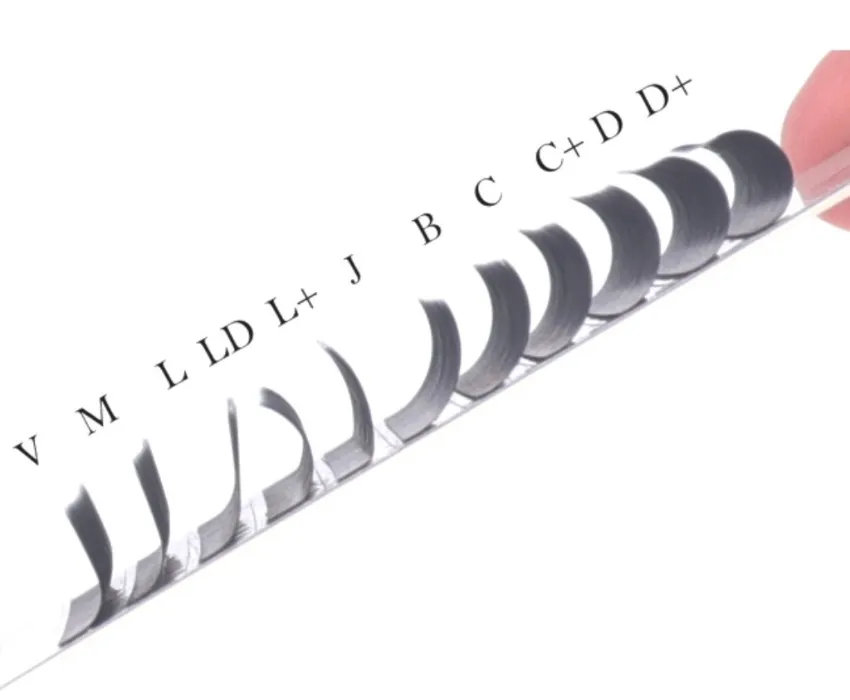
- C (45–50°): Natural lift for almond eyes; fastest set with standard adhesives.
- CC (50–55°): Sharper base, softer tip; natural cat-eye; slightly longer set time than C.
- D (60–70°): Dramatic open-eye look; needs slower-set glue so the bend seats fully.
When you’re comparing flat lash SKUs, verify the listed degree per tray instead of trusting the curl name alone. A D tray that measures closer to 55° behaves like a CC on the eye — so your glue choice changes accordingly.
Eye Shape Mapping
Curl selection is lid engineering: the best flat lash curl either follows the eye’s natural line or fights it.
A flat lash curl angle chart only makes sense once it is read against the client’s lid. The same D curl that opens one eye can bury another. For practical use, the mapping starts with four eye shapes.
Almond eyes – any curl works; CC is the versatile default
Almond eyes have balanced lid structure, so C, CC and D all stay wearable. CC (50–55°) gets picked most often because the base angle lifts while the softer tip keeps it from looking theatrical — the natural cat-eye effect clients ask for by name.
C curl (45–50°) reads a shade more subtle under the brow. D curl (60–70°) turns the same eye dramatic. When a salon builds a core flat lash kit, CC is the default fill.
Round eyes – avoid D curl; C curl opens without overexposure
Round eyes already show a lot of lid. D curl stretches that openness into a startled expression. C curl lifts the outer line without over-curving the top. The flat base spreads weight, so C holds its angle without dragging down.
Hooded eyes – D curl, but keep it short
The best flat lash curl for hooded eyes is a short D, not a dramatic long one. Hooded lids hide the lash line, so a weak curl disappears. D curl (60–70°) clears the fold, but pairing it with 14mm+ lashes puts the extension back into the crease. Shorter D flat lashes in the 10–12mm range keep the lift visible.
If a hooded client wants more length, step down to 12mm before switching to a slower-set glue. Size the curl first, then adjust length in small increments.
Monolids – CC or D lift, depending on the client’s comfort
Monolids have no crease to register a subtle bend, so low-curl lashes can vanish when the eye opens. CC produces visible lift with a soft finish. D curl flat lashes for monolid eyes deliver an open, vertical look. Client preference decides the gap between them.
Retention also shifts with curl height. A high-curled flat lash has less contact area at the bend, so the adhesive needs roughly 2 seconds longer to set than the same lash in C. C curl bonds faster with standard fast-dry adhesives because the flatter angle keeps full base contact. Lash Glues Factory carries C, CC and D curls in the same flat lash program, which makes matching the mapping above — and the glue speed — a one-supplier decision.
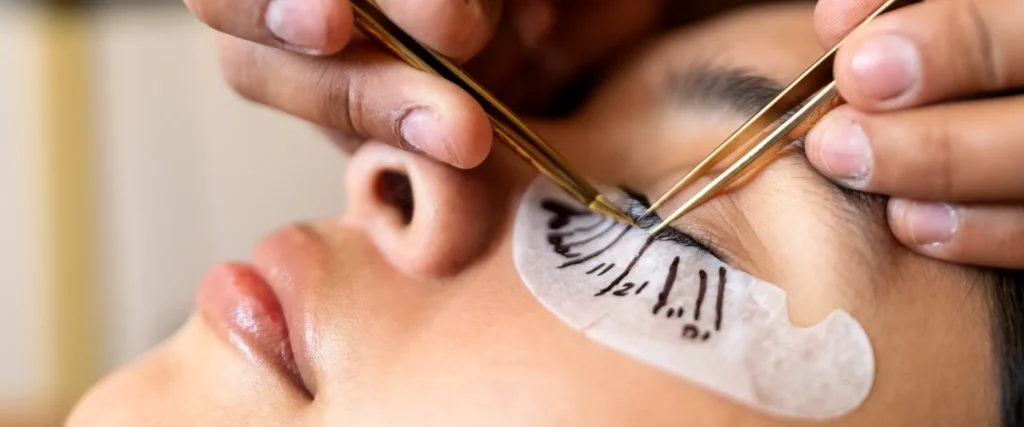
Curl Compatibility with Lash Length
Length dictates curl: 8–10mm C, 11–13mm CC, 14–16mm D.
A flat lash curl angle chart only helps if you apply it to length. The same curl that opens a 9mm eye looks flat at 15mm, and a high-angle curl that lifts a long lash kinks a short one. Pairing starts with the millimetres, not the eye shape.
Short (8–10mm): C curl
Short lashes carry less weight, so C curl’s 45–50° arc is enough to open the eye without looking abrupt. At 8–10mm, C also keeps the flat base in closer contact with the natural lash, which means a standard fast-drying lash glue sets cleanly and retention stays predictable.
Medium (11–13mm): CC curl
CC is not halfway between C and D. In flat lashes, CC uses a more pronounced base angle with a softer tip, which creates a natural cat-eye shape at 11–13mm. That subtle structure lifts the mid-length lash without the tip pushing away from the natural lash line.
Long (14–16mm): D curl
Long flat lashes droop unless the curl carries them. D curl’s 60–70° angle counteracts that weight at 14–16mm. The caveat is hooded eyes: a 14mm+ D can fold back into the crease. For those clients, a shorter D (10–12mm) lifts better than a long D ever will.
Adhesive timing shifts with curl, too. High-curl flat lashes create a smaller contact area when the glue is applied thick, so the bond needs roughly two extra seconds to seat. That’s why slower-set glue suits D sets, while C sets work fine with standard fast-drying adhesives.
- 8–10mm: C curl (45–50°); natural lift; fast-drying adhesive.
- 11–13mm: CC curl (50–55°); balanced cat-eye lift; medium-set adhesive.
- 14–16mm: D curl (60–70°); prevents droop; allow two extra seconds of cure time.
Lash Glues Factory carries flat lashes across these curl-and-length pairings, and private-label custom packaging lets a studio buy each SKU separately instead of receiving one mixed tray. That keeps small trial orders clean and repeat orders consistent.
Adhesive Performance by Curl
D curl needs roughly 2 extra seconds of cure time.
High-curl D lashes need a slower-set adhesive. The 60–70° bend reduces contact at the base, so the glue requires about 2 extra seconds to seat the extension flush. C curl at 45–50° sits flatter and locks fast with standard drying glue. Match the formula to the curl — not to habit.
D Curl: The Angle Costs You Contact Area
D curl creates surface tension at the seam that low-curl lashes don’t. Thick, fast-setting glue bridges the gap instead of wetting the full base, which leads to early lifting. A slower-set formula gives the bead time to flow into the contact zone before curing begins.
That 2-second window separates a set that holds for weeks from one that lifts mid-schedule.
C Curl: Standard Speed Works
C curl’s flatter base gives the adhesive a wider surface to grab. Standard fast-drying glue performs predictably across volume and classic C curl sets. The bond locks before the extension can shift.
- D curl glue: Slower-set or sensitive formula. The 60–70° bend reduces base contact, so the adhesive needs roughly 2 extra seconds to wet the seam and seat flush.
- C curl glue: Standard fast-drying adhesive. The flatter 45–50° angle creates a wider contact area, so the bond locks before the extension shifts.
- Choose slower-set if: You’re building D curl on hooded or monolid clients, where the angle leaves less room for error at the base.
- Choose fast-dry if: C curl volume or classic sets with high daily volume — the bond locks fast without a retention trade-off.
The production line at Lash Glues Factory includes both fast-drying and sensitive formula adhesives for this exact reason. Curl geometry should dictate which bottle you reach for. On D curl sets, that’s a slower-set formula; on C curl, keep the fast-dry in hand.
Quick-Reference Curl-Eye Shape Matrix
The strongest curl isn’t always the right one.
The three standard flat lash curls — C, CC, and D — each serve a distinct purpose. The one you reach for should depend on your client’s natural eye shape and the lash length you plan to apply. Here is the pairing logic that works consistently.
The 3-Curl Cheat Sheet
- C curl (45–50°): Natural lift. Best for almond eyes and clients who want a subtle enhancement. Pairs well with shorter 8–10mm lashes for a soft, open look.
- CC curl (50–55°): Extra curl without dramatic volume. Has a more pronounced base angle but softer tip angle than C — giving a natural cat-eye effect on almond and slightly round eyes.
- D curl (60–70°): Dramatic open-eye effect. Ideal for hooded eyes and monolids where lid weight hides less curled styles. Works best with 11–13mm length to avoid overshooting the crease.
- Choose C curl if: Your client has almond or round eyes and wants a natural, everyday look. Use 8–10mm lengths for a soft finish.
- Choose CC curl if: You want the cat-eye extension effect without the intensity of a deep D curl. Pairs well with 11–13mm for balanced lift.
- Choose D curl if: Your client has hooded eyes or monolids. Stay in the 10–12mm range for lift that lasts — not length that folds into the crease.
Hooded Eye Caution
Many lash artists reach for 14mm+ D curl on hooded eyes, thinking more length equals more lift. In practice, that length folds back into the crease on clients with heavy lid skin. Shorter D curls — 10–12mm — deliver the visible lift without the fold-back.
Glue performance also shifts with curl. High-curl flat lashes like D curl create a smaller contact area at the base, so the glue takes roughly 2 seconds longer to cure than on a low-curl style. When working with D curl, use a formula with a slightly longer working time — like a standard-set or sensitive lash glue — rather than an ultra-fast 1-second dry adhesive. Lash Glues Factory stocks flat lash extensions across these curl profiles, so spec sheets can be verified before you commit to a bulk order.
Choose Based on the Client, Not the Trend
Conclusion
Curl choice is the retention variable you control before the adhesive sets. Skip the eye-shape mapping and the wrong angle shows up within the first 2-week fill cycle as a redo, a refund, or a lost client. Matching C, CC, or D to the lid and length range costs nothing upfront; ignoring it costs chair time and the adhesive you already mixed.
- CC curl has a pronounced base angle and softer tip: natural cat-eye, not a halfway C/D.
- For hooded eyes, choose D curl at 10–12mm; 14mm+ folds back into the crease and kills lift.
- D curl flat lashes need about 2 seconds longer glue cure than C curl due to the smaller contact area.
- Match length to curl: 8–10mm with C, 11–13mm with CC, 14–16mm with D to prevent droop.
Before your next flat lash order, check your client mix against the curl-eye shape matrix and list the C, CC, and D SKUs that cover your most requested lengths. If you buy in volume, ask to see the curl-angle specs and run a small lot with your current adhesive to confirm the drying window. Browse the flat lash options at Lash Glues Factory to line up the curl, length range, and packaging under one supplier.
Frequently Asked Questions
What is the difference between C, CC, and D curl?
C curl lifts 45–50°, CC is 50–55°, and D hits 60–70° for the most dramatic open-eye effect. CC is not a midpoint between C and D; it behaves as its own curl with more. Match curl degree to eye shape before ordering.
What flat lash curl works best for hooded eyes?
D curl is essential for hooded eyes because its 60–70° angle counteracts lid weight. Pair it with longer lengths like 14–16mm to prevent droop and keep the lift visible. For hooded clients, default to D curl and slower-set adhesive.
What length pairs with CC curl?
CC curl pairs best with 11–13mm medium lashes for balanced lift. It also works naturally on almond eyes if you want extra curl without a dramatic jump. Use CC as the go-to for medium-length, natural sets.
Does D curl need special lash glue?
Yes, D curl creates more surface tension, so a slower-set adhesive is recommended to lock the bond. C curl holds faster with standard drying adhesives, making it easier for quicker applications. Choose slow-set glue whenever you install high-curled lashes.
Which curl should round eyes avoid?
Round eyes should avoid D curl because the high angle can overexpose and overwhelm the eye. C curl opens the eye without pushing the lid into an exaggerated look. For round eyes, stay with C curl for a natural opener.